How to Deep Clean Carpet with Enzyme Cleaner (2026)
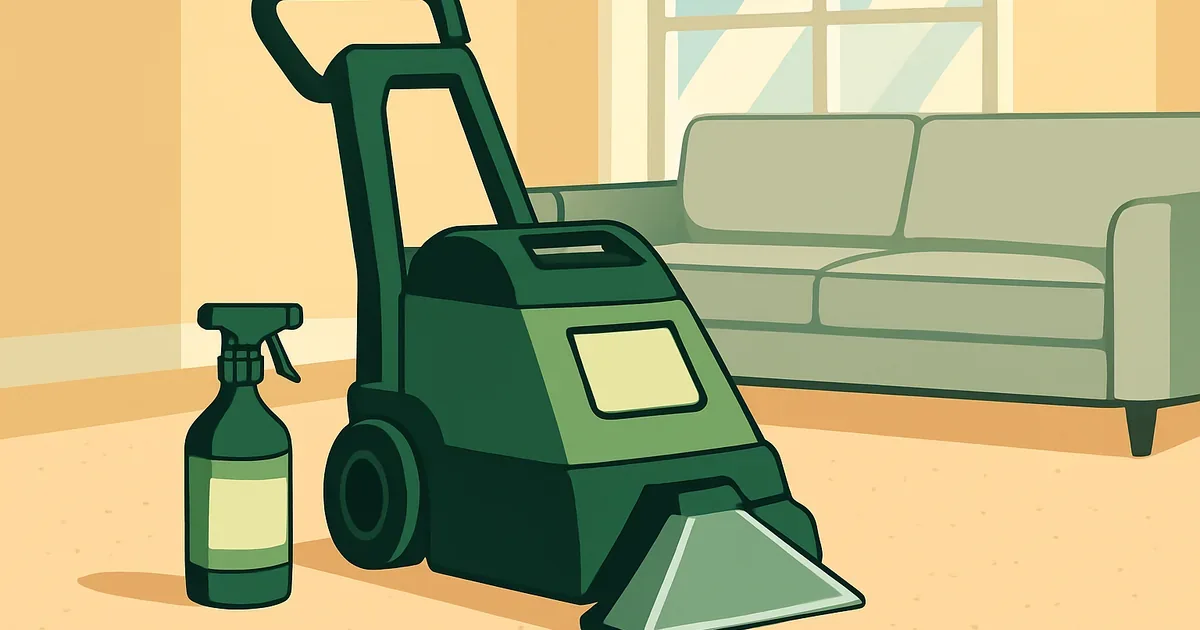
Table of Contents
Yes, you can use enzyme cleaners in most carpet cleaning machines. The best approach is a two-pass method: pre-treat with enzyme cleaner first, let it sit 15-30 minutes, then extract with your machine. This breaks down organic stains at the molecular level before you pull the debris out.
If you’re new to these products, our guide on how enzyme cleaners work covers the basics. This article focuses on the hands-on process of using them with a carpet cleaning machine.
Why enzyme cleaners beat standard carpet shampoo
Standard carpet shampoos lift surface dirt and mask odors with fragrance. They don’t break down the organic matter that causes stains and smells in the first place.
Enzyme cleaners work differently. Protease enzymes digest protein-based stains like pet urine, food spills, and body oils. Lipase enzymes handle greasy residue. Instead of covering up the problem, they dismantle it at the molecular level.
The practical difference? Odors don’t come back after cleaning. With regular shampoo, you might notice that old pet smell returning on a humid day. Enzyme-treated carpet stays clean-smelling because the source of the odor is gone, not just masked. The Carpet and Rug Institute recommends professional deep cleaning every 12-18 months, and enzyme pre-treatment can make each cleaning more effective.
ℹ️ Best for Organic Stains
Enzyme cleaners work best on organic stains like pet accidents, food spills, and body oils. For purely synthetic stains like paint or ink, you’ll still need a specialty remover. If you’re not sure what caused the stain, try enzyme cleaner first since most household carpet stains are organic.
Which carpet machines work with enzyme cleaners
Not every carpet machine handles enzyme cleaners the same way. Here’s what you need to know before you pour anything into a tank.
Compatible machine types
Most carpet cleaning machines work fine with diluted enzyme solutions. Here’s a quick breakdown:
| Machine Type | Compatible? | Notes |
|---|---|---|
| Full-size extractors (Bissell Big Green, Rug Doctor) | Yes | Best option for whole-room deep cleaning |
| Portable spot cleaners (Bissell Little Green, Hoover PowerDash) | Yes | Good for targeted stain treatment |
| Rental machines (grocery store, home improvement store) | Yes | Check the manual for third-party solution rules |
| Steam cleaners (heat above 140F) | Use caution | High heat can deactivate enzymes |
| Machines with built-in detergent dispensers | Use caution | Auto-dispensing may mix chemicals that cancel enzyme action |
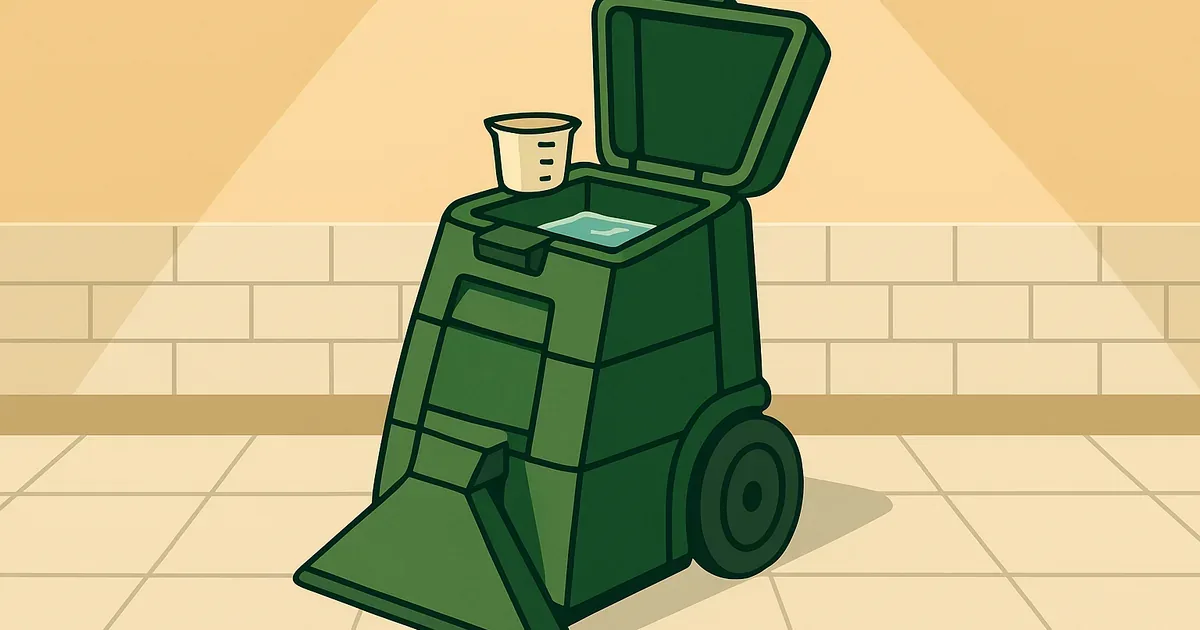
Full-size extractors give you the best results for deep cleaning because they have stronger suction and larger solution tanks. Portable spot cleaners work well for individual stains but aren’t practical for a whole room.
Machines to be careful with
Two types of machines can cause problems with enzyme cleaners.
Steam cleaners that heat water above 140F will deactivate the enzymes. The proteins in enzyme cleaners break down (denature) at high temperatures. If your machine has a heating element, check whether you can turn it off or set it below 140F.
Machines with automatic detergent dispensers can mix their built-in detergent with your enzyme solution. Many detergents contain surfactants or bleaching agents that interfere with enzyme activity. If your machine has this feature, empty the detergent reservoir and run only the enzyme solution through the clean water tank.
⚠️ Don't Mix Chemicals
Don’t mix enzyme cleaner with bleach, ammonia, or heavy detergents in the same tank. These chemicals deactivate the enzymes before they do their job. Use the enzyme cleaner on its own, diluted with plain water.
Dilution ratios by machine type
Concentrations vary between brands, so always check your product label first. These ratios are general starting points that work for most enzyme carpet cleaners.
| Machine Type | Tank Size | Enzyme Cleaner | Water |
|---|---|---|---|
| Full-size extractor | 1-1.5 gallons | 4-6 oz | Fill to line |
| Portable spot cleaner | 32-48 oz | 2-3 oz | Fill to line |
| Manual sprayer (pre-treatment) | 32 oz | Full strength or 50/50 | Half and half with water |
For pre-treatment, use a stronger concentration. You want the enzymes hitting the stain at full power during the soak phase. For the machine pass, a lighter dilution works because you’re extracting broken-down material, not doing the primary cleaning.
The two-pass method (step by step)
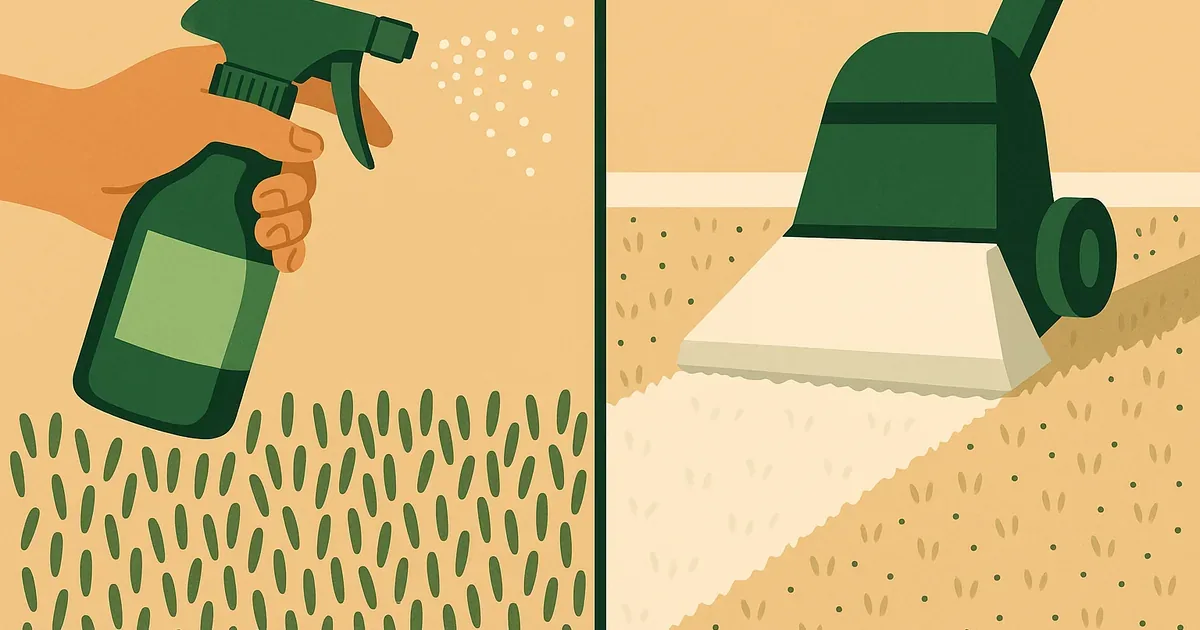
This method gives you the best results because it separates the enzyme treatment from the extraction. The enzymes do the breaking down. The machine does the pulling out. Here’s how:
-
Vacuum the carpet. Remove loose dirt and debris first. Enzyme cleaners target organic matter, not surface dust. A thorough vacuum keeps your machine’s filter cleaner and helps the enzymes focus on the stains that matter.
-
Pre-treat with enzyme cleaner. Spray full-strength enzyme cleaner on stained and high-traffic areas. Saturate the carpet fibers so the solution reaches the carpet pad underneath. Don’t be stingy here. If the stain soaked deep, your cleaner needs to reach just as deep.
-
Wait 15-30 minutes. Let the enzymes break down organic matter. Cover treated areas with a damp towel to keep the solution from drying out. For heavy pet stains, 1-2 hours of contact time works better.
-
Fill your machine. Add diluted enzyme cleaner to the clean water tank using the ratio for your machine type (see the table above). Don’t add any other cleaning product to the tank.
-
Make extraction passes. Run the machine over the carpet in slow, overlapping passes. The first pass applies solution. The second pass extracts it along with broken-down debris. Move slowly. Rushing leaves solution and dirt behind.
-
Dry the carpet. Open windows, run fans, or turn on the HVAC. Carpet should be dry within 6-12 hours. Walking on damp carpet pushes dirt back into the fibers.
💡 Find Hidden Stains First
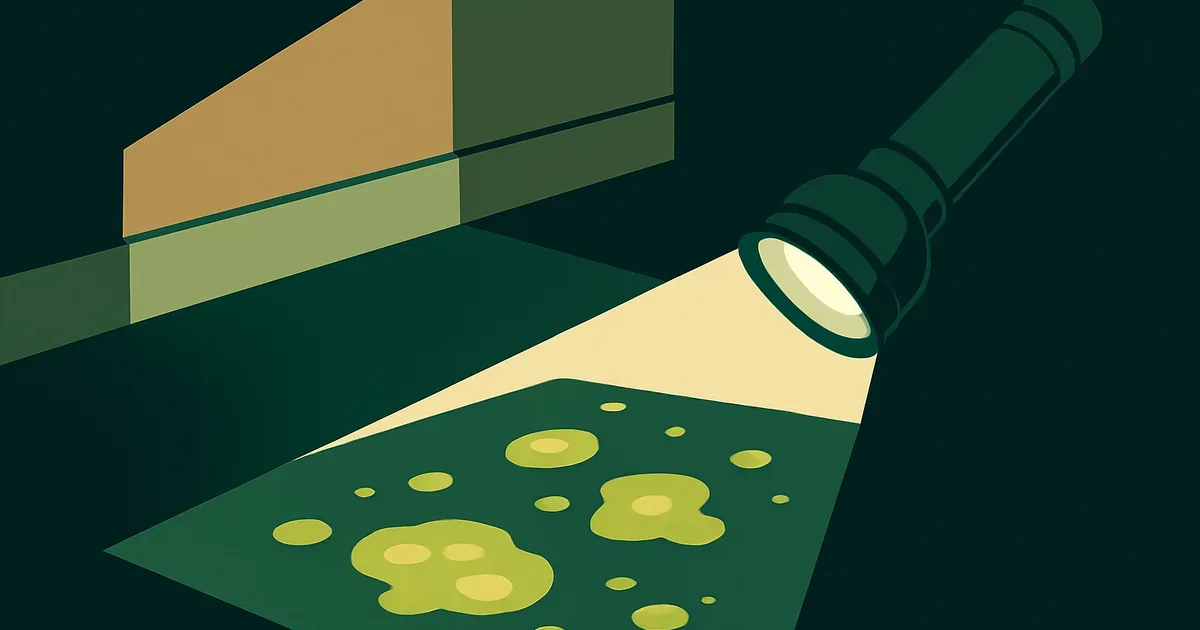
For pet urine stains that have soaked into the carpet pad, use a UV black light to find the exact spots before pre-treating. You’ll save time and enzyme cleaner by targeting only the affected areas. UV black lights cost about $10-15 at most hardware stores.
For more details on using enzyme cleaner on carpet, we have a separate guide that covers spot treatment and maintenance cleaning. The IICRC (Institute of Inspection, Cleaning and Restoration Certification) sets the industry standards for carpet cleaning procedures.
Tips for stubborn and set-in stains
Sometimes one pass isn’t enough. Old stains and heavy soiling need extra attention.
Old pet stains
Pet stains that have been sitting for weeks or months may need two full treatment cycles. The uric acid crystals in pet urine bond tightly with carpet fibers over time, and a single enzyme treatment may not break down all of them.
For severe cases, pull the carpet back at one corner to check the pad underneath. If the pad is stained or smells strongly, consider soaking it directly with enzyme cleaner. Our guide on removing pet stains from carpet walks through this process.
If you’re shopping for a product, check our picks for the best enzyme carpet cleaners and the best pet stain removers for carpet.
High-traffic soil lines
Those dark lines along hallways and walkways are caused by body oils and ground-in dirt that build up over time. Regular vacuuming removes surface dust but doesn’t touch the oily layer underneath.
Enzyme pre-treatment with a lipase-based cleaner loosens this organic layer before machine extraction. Focus your pre-treatment spray on these high-traffic paths and give them the full 30 minutes of contact time. If you’re also dealing with stains on nearby hardwood floors, we have a separate guide for that surface type.
⚠️ Know When to Replace
If carpet is older than 10 years with heavy staining, even enzyme cleaners have limits. At some point, the pad itself holds too much contamination and needs replacing. Enzyme cleaning can extend your carpet’s life, but it can’t reverse a decade of deep soiling.
Wrapping up
The two-pass method (enzyme pre-treatment followed by machine extraction) gives you cleaner results than dumping carpet shampoo into a machine and hoping for the best. The enzymes do the real work of breaking down organic stains. The machine just pulls out the broken-down material.
Check your machine’s compatibility, use the right dilution ratio, and give the enzymes enough contact time. Those three things make the biggest difference between a carpet that looks clean and one that actually is clean. For choosing products with safer ingredients, the EPA Safer Choice program certifies cleaners that meet environmental and health standards.
If you’re also dealing with odors beyond carpet, you might find our guides on enzyme cleaners for pet odors and enzyme cleaner vs vinegar helpful for broader cleaning strategies.
Frequently Asked Questions
Can I put enzyme cleaner directly in my carpet machine?
How long should enzyme cleaner sit on carpet before extraction?
Will enzyme cleaner damage carpet fibers?
Can I use enzyme cleaner with a Rug Doctor rental machine?
How many passes should I make with the carpet machine?
Is it better to hire a professional or use an enzyme cleaner myself?
Cleaning Product Researcher
Sarah Chen is a pen name for our lead product researcher. A lifelong dog person who now shares her home with two cats, she's no stranger to enzyme cleaners. She writes the guides and reviews on this site based on product research, ingredient analysis, and real user feedback.