Enzyme Cleaner for Hardwood Floors: Safe Picks
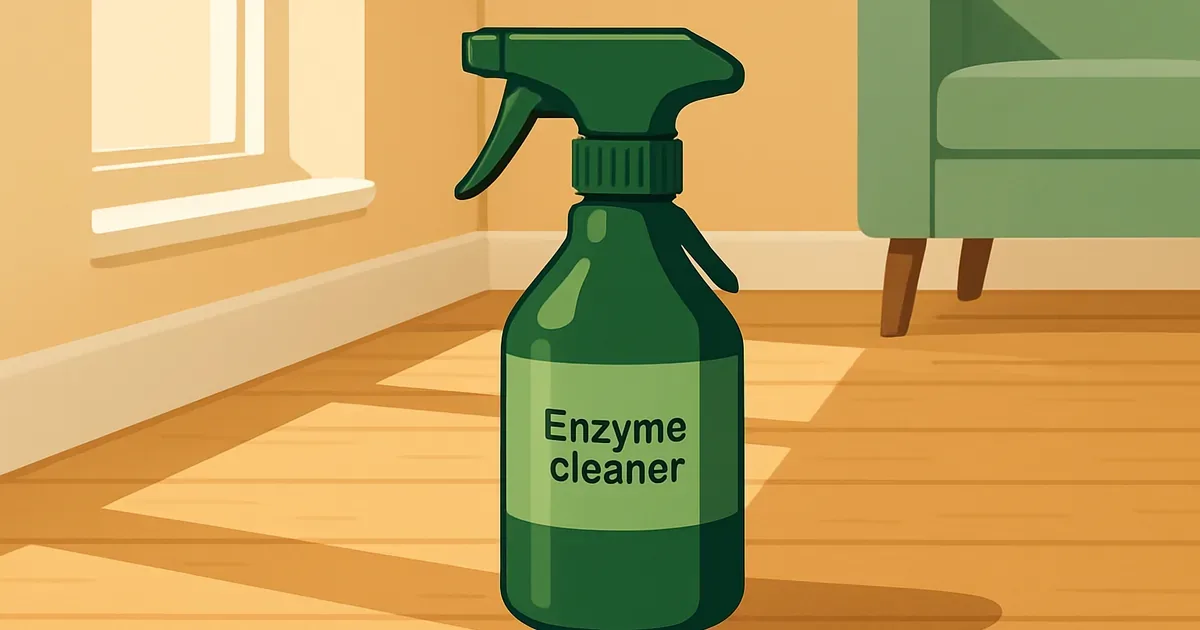
Table of Contents
pH-neutral enzyme cleaners are safe for sealed hardwood floors. They won’t strip the finish or damage the wood. The key is avoiding excess moisture and never letting the cleaner pool or soak into seams. If you follow the right technique, enzyme cleaners are one of the best ways to remove organic stains like pet urine, food spills, and tracked-in grime from wood surfaces.
This guide covers which enzyme cleaners work on wood, how to tell your finish type, the soaking mistake that causes real damage, and a step-by-step application method.
Affiliate Disclosure: This page contains affiliate links. When you purchase through our links, we may earn a commission at no additional cost to you. Full disclosure.
Are enzyme cleaners safe for hardwood floors?
Yes, with conditions. pH-neutral formulas (pH 6-8) are safe for sealed wood. Enzyme cleaners don’t contain harsh acids or bleach that strip finishes. The enzymes are just proteins that target organic stains.
The risk isn’t the enzymes. It’s the moisture. Wood and excess water don’t mix. Any liquid left sitting on hardwood for too long can cause swelling, warping, or finish damage. That’s true for enzyme cleaners, plain water, or any other liquid.
The good news: if you use a spray-and-wipe method and keep the moisture minimal, enzyme cleaners work well on hardwood without causing problems.
For a deeper look at the science, read our guide on how enzyme cleaners work on wood surfaces.
Know your floor finish first
Not all hardwood floors are the same. The type of finish on your floor determines how much moisture it can handle. Here’s how to tell what you have.
Sealed hardwood (polyurethane, aluminum oxide)
This is the most common type in homes built after 1970. The wood has a clear protective coating on top. You can test it by placing a single drop of water on the floor. If the water beads up and sits on the surface, your floor is sealed.
Sealed hardwood handles enzyme cleaners well with a damp (not wet) application. The finish acts as a barrier between the liquid and the wood underneath.
Unsealed or wax-finished hardwood
Older homes and some specialty floors use wax finishes or no finish at all. Test with a water drop: if the water soaks in immediately, your floor is unsealed.
Use enzyme cleaners with extreme caution on these floors. Spray-and-wipe only. Never let liquid sit on the surface for more than a few minutes. The wood grain absorbs moisture quickly, which can cause staining and swelling.
Engineered hardwood
Engineered hardwood has a thin wood veneer over plywood or composite material. It looks like solid hardwood, but moisture can cause the layers to separate over time.
Enzyme cleaners are safe here if you apply them lightly and wipe up quickly. The same spray-and-wipe approach works. Just be more cautious about moisture near seams and edges where water can seep between boards.
💡 The Water Drop Test
Not sure what finish your floor has? Place a single drop of water in an inconspicuous spot. If it beads up, you have a sealed finish. If it soaks in within 1-2 minutes, your floor is unsealed or wax-finished. This 10-second test tells you how carefully you need to handle moisture.
The soaking mistake (and why it ruins floors)
If you’ve used enzyme cleaners on carpet before, you know the drill: soak the stain, cover it with plastic wrap, and wait hours or overnight. That technique works great on carpet. It’s terrible for hardwood.
Here’s what happens when liquid pools on wood:
- It seeps into seams between boards and reaches the unfinished wood underneath
- The wood swells as it absorbs moisture
- Cupping and warping follow as boards push against each other
- The finish can turn white or cloudy from prolonged moisture contact
The right approach for hardwood is different. Spray lightly, let it sit for 5-10 minutes max, then wipe completely dry. For stubborn stains, repeat 2-3 short applications rather than one long soak. Multiple short treatments are always safer than one extended one.
⚠️ Never Soak Hardwood
Enzyme cleaners need dwell time to work on stains. On carpet, you soak and wait. On hardwood, you spray lightly and wipe. If you pour enzyme cleaner onto a hardwood floor and let it sit for hours, you risk warping, finish damage, and costly repairs. Short, repeated applications are the way to go.
How to use enzyme cleaner on hardwood floors
Follow these steps for the best results without risking damage to your floor.
-
Identify the stain. Pet urine, food, vomit, and tracked-in organic grime all respond well to enzyme cleaners. Mineral stains (hard water rings, calcium) need a different approach.
-
Blot up any excess. Use paper towels or a dry cloth to absorb as much of the spill as possible before applying any cleaner. Press firmly. Don’t rub or scrub, which can push the liquid into seams.
-
Spray enzyme cleaner lightly. Use a spray bottle, not a pour. You want the surface damp, not wet. Cover the stain area with a light, even mist. If your enzyme cleaner only comes in a pour bottle, spray it onto a cloth first, then apply the damp cloth to the stain.
-
Wait 5-10 minutes. Set a timer. This gives the enzymes enough contact time to start breaking down the stain without leaving moisture on the wood too long.
-
Wipe dry with a clean cloth. Don’t air dry. Use a clean, dry microfiber cloth to absorb all remaining moisture from the floor. Make sure the surface is completely dry when you’re done.
-
Repeat if needed. If the stain or smell remains after the area dries, apply another light round. Two or three short treatments are safer and more effective than one long soak.
ℹ️ When the Stain Won't Budge
If pet urine has soaked into the seams between boards or reached the subfloor, enzyme cleaners alone may not fix it. At that point, the affected area may need sanding and refinishing by a certified flooring professional. This is most common with old, untreated urine stains on unsealed wood.
Spray-and-Wipe Technique for Hardwood
Blot the stain first
Remove any standing liquid before applying cleaner.
Spray lightly
Use a spray bottle set to a fine mist. Never pour directly on hardwood.
Distribute with cloth
Spread the cleaner evenly with a microfiber cloth. Don't let it pool.
Wait 5-10 minutes
Set a timer. Enough contact time without risking moisture damage.
Wipe dry completely
Use a clean, dry microfiber cloth. Make sure the surface is fully dry.
Repeat if needed
Two or three short treatments are safer than one long soak.
What to look for in a wood-safe enzyme cleaner
Not every enzyme cleaner is a good fit for hardwood. Here’s what to check before you buy.
- pH-neutral formula (pH 6-8). Acidic products can etch polyurethane. Alkaline products can dull the finish. Look for “pH neutral” or “pH balanced” on the label.
- No bleach, ammonia, or harsh solvents. These strip finishes and can discolor wood. The National Wood Flooring Association recommends avoiding acidic and alkaline cleaners on finished wood.
- Spray bottle format. A spray bottle gives you better control over how much liquid hits the floor. Pour bottles make it too easy to over-apply.
- Residue-free drying. Some enzyme cleaners leave a sticky film after drying. Look for formulas that dry clean and clear, especially if you’re treating a visible area.
For broader product recommendations, see our picks for enzyme cleaners for pet odors. Many of those products work well on hard surfaces, including sealed wood.
💡 Microfiber Cloths Work Best
Use microfiber cloths for wiping enzyme cleaner off hardwood. Microfiber absorbs more liquid than cotton and leaves fewer streaks. Keep a stack of clean, dry microfiber cloths near your cleaning supplies for quick response to spills and stains.
Best enzyme cleaners for hardwood floors
For pet stains on sealed wood
Pet urine is the most common reason people reach for an enzyme cleaner on hardwood. Look for formulas specifically designed for hard surfaces. These have lower liquid volumes and are formulated to dry without residue.
Products labeled “hard floor” or “hard surface” formula tend to work best. They’re designed with wood and tile in mind, not carpet. The enzyme concentration is similar, but the liquid volume per application is lower.
Prices for hard-surface enzyme cleaners typically range from $10-18 for a 32 oz spray bottle (at time of writing). Check current prices before buying, as they shift frequently.
For general cleaning on all wood types
For routine cleaning rather than stain treatment, look for milder enzyme formulas. These are diluted for regular mopping or spray-and-wipe use. They help break down tracked-in organic grime, kitchen grease, and everyday soil.
Use these with a damp mop wrung nearly dry. The goal is maintenance, not deep stain treatment. A light enzyme mop once a week can keep floors clean without buildup. For product options designed for hard floors, see our enzyme floor cleaner guide.
For old or set-in stains
Older stains need a stronger enzyme concentration, applied carefully. Plan for 2-3 rounds of treatment. Each round should be a light spray, 5-10 minute wait, and thorough wipe-dry.
Between rounds, let the floor dry completely before reapplying. This prevents moisture from accumulating in the wood.
If the stain is near carpet, check our picks for enzyme cleaners for carpet to treat both surfaces with the right product for each.
Wrapping up
Enzyme cleaners work well on hardwood floors when you respect the moisture limits. Use a pH-neutral formula, apply it lightly with a spray bottle, keep the dwell time under 10 minutes, and always wipe the surface dry when you’re done.
The biggest mistake is treating hardwood like carpet. On carpet, you soak and wait. On wood, you spray and wipe. Short, repeated treatments beat one long soak every time.
Know your floor finish, choose a wood-safe formula, and your hardwood will come out clean without damage. For more on the right products, check our picks for the best enzyme cleaners for cat urine and dog urine. If you’re also dealing with other surfaces, see our guides on tile and grout, concrete, and mattresses. And for more on why vinegar isn’t a good substitute on wood floors, we have a full comparison.
Frequently Asked Questions
Will enzyme cleaner damage hardwood floors?
Can I use enzyme cleaner on engineered hardwood?
How do I remove pet urine from hardwood floors with enzyme cleaner?
What pH should an enzyme cleaner be for hardwood?
Can I mop hardwood floors with enzyme cleaner?
Related Articles
Cleaning Product Researcher
Sarah Chen is a pen name for our lead product researcher. A lifelong dog person who now shares her home with two cats, she's no stranger to enzyme cleaners. She writes the guides and reviews on this site based on product research, ingredient analysis, and real user feedback.