How to Remove Pet Stains from Carpet Permanently
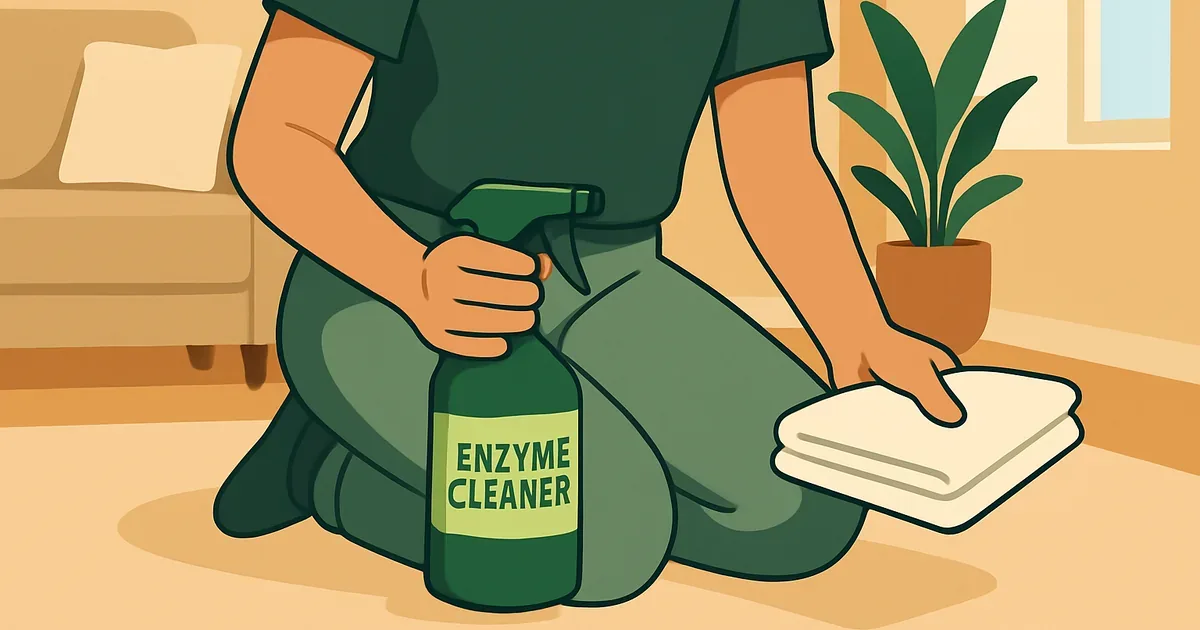
Table of Contents
To remove pet stains from carpet permanently, you need to address three layers: the visible stain, the odor-causing compounds in the carpet pad, and the residue that attracts your pet back to the same spot. An enzyme cleaner is the only reliable way to break down all three. Regular cleaners handle the surface but leave uric acid crystals embedded deep in the carpet padding. Those crystals are why the stain keeps coming back.
Affiliate Disclosure: This page contains affiliate links. When you purchase through our links, we may earn a commission at no additional cost to you. Full disclosure.
Here’s the full process, from fresh stains to old ones, plus how to verify the stain is truly gone.
Why Pet Stains Come Back (and What “Permanent” Means)
You clean a spot. It looks great. Two weeks later, the smell returns on a humid day. Sound familiar?
Here’s what’s happening. Regular cleaners remove the visible stain but leave uric acid crystals behind in the carpet pad. Those crystals are insoluble in water, so soap and vinegar can’t dissolve them. They sit there, locked into the pad fibers, and reactivate whenever moisture or humidity hits them. That’s why a spot can smell “clean” for weeks, then suddenly reek again.
Your pet notices too. Dogs and cats can detect urine compounds at concentrations far below what humans can smell, according to the American Kennel Club. Even after you’ve cleaned, your pet picks up traces of uric acid and re-marks the same spot.
“Permanent” removal means breaking down the uric acid at the molecular level. Enzyme cleaners do this. The protease enzymes attach to the crystal structure, break it into smaller compounds, and those compounds dissolve in water and evaporate. No crystals left, no reactivation, no scent trail for your pet to follow.
For more background on the science, read our explanation of how enzyme cleaners work.
What You’ll Need
Gather everything before you start. You don’t want to leave a stain sitting while you run to the store.
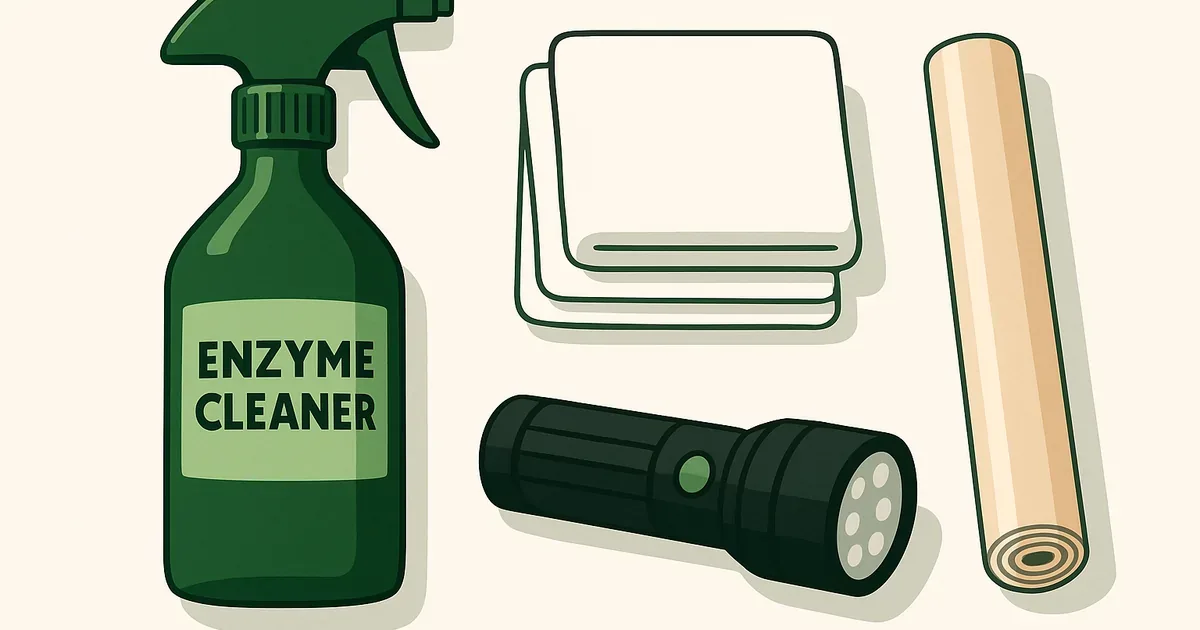
- Enzyme cleaner (see our picks for the best pet stain removers for carpet)
- Clean white cloths or paper towels (white so you can see what you’re pulling up)
- UV flashlight (365nm wavelength works best, available for $10-15 online)
- Plastic wrap or a damp towel
- Optional: carpet extraction machine (cold water setting only)
Step-by-Step: Removing Fresh Pet Stains
Caught it early? Good. Fresh stains are much easier to remove permanently because the uric acid crystals haven’t fully formed yet.
-
Blot immediately. Soak up as much liquid as possible with white cloths or paper towels. Press firmly and work from the outside edges inward to prevent spreading. Never rub. Rubbing pushes the urine deeper into carpet fibers and the pad below.
-
Apply enzyme cleaner generously. Saturate the stained area so the product reaches the carpet pad. Most pet urine soaks through carpet fibers within minutes. If you only treat the surface, you’re leaving the worst of it untouched underneath. Use about 1.5-2x the visible stain area.
-
Cover and wait. Lay plastic wrap or a damp cloth over the treated area. Enzymes only work while the area stays moist. If the solution dries out, the enzymes stop. Wait at least 15-30 minutes for fresh stains.
-
Blot dry. Press clean cloths firmly into the carpet to absorb moisture. Don’t rub or scrub.
-
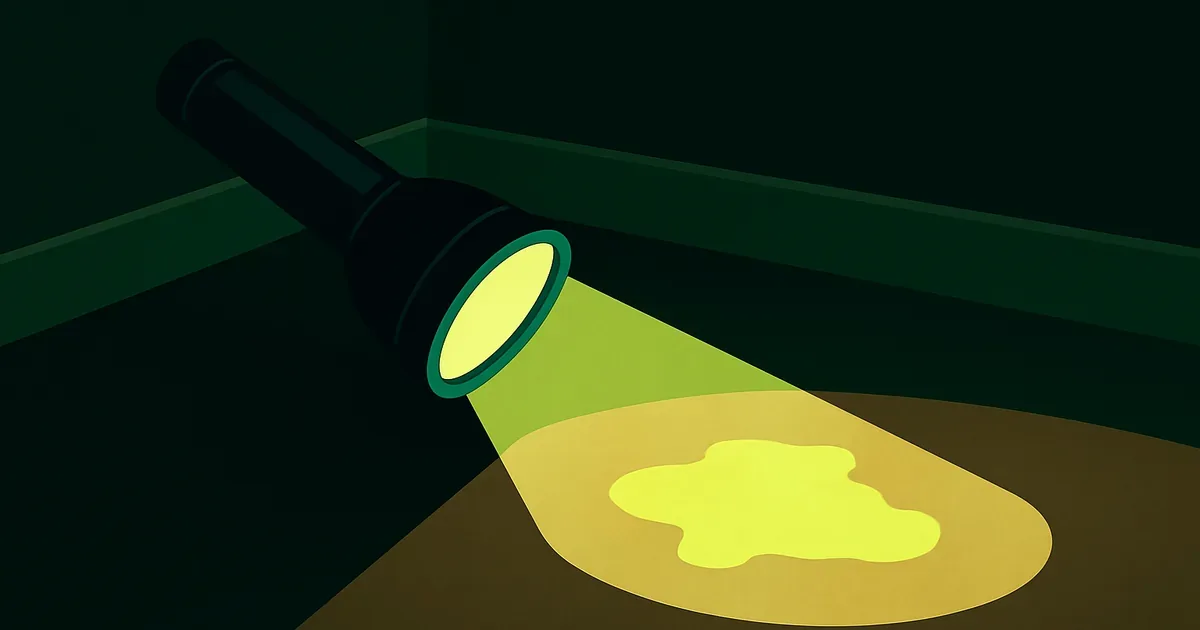
Verify with UV light. Wait until the carpet is fully dry (12-24 hours). Then darken the room and hold a UV flashlight 6-12 inches from the carpet. Remaining urine will glow yellow-green. If you see glow, apply a second treatment.
💡 Tip
Speed matters with fresh stains. The sooner you treat a pet accident, the less time uric acid crystals have to form and bond to carpet fibers. If you catch it within the first hour, a single enzyme treatment usually does the job. After 24 hours, you’re dealing with crystal formation and may need repeated treatments.
Step-by-Step: Removing Old or Set-In Pet Stains
Old stains take more effort because the uric acid crystals are fully formed and bonded deep into the carpet pad. The process is the same, but with extra saturation and longer soak times.
-
Find all stains with UV light. Darken the room and scan the carpet slowly with a UV flashlight. Old stains you can’t see are often the source of lingering odor. Mark each spot with a small piece of tape so you can find them when the lights come back on.
-
Pre-treat with lukewarm water. Lightly dampen each stained area to rehydrate dried uric acid crystals. This helps the enzyme cleaner make contact with the crystals. Don’t soak the area, just moisten it.
-
Apply enzyme cleaner and saturate deeply. Use 2-3x the amount you’d use on a fresh stain. The product needs to soak through the carpet and reach the pad where the crystals have concentrated. Don’t be shy with the amount.
-
Extended soak (8-24 hours). Cover the treated areas with plastic wrap to prevent drying. Enzymes only work while moist, and old crystals take much longer to break down than fresh urine. Check after 8 hours. If the plastic wrap looks dry underneath, add more enzyme cleaner.
-
Extract or blot. Use an extraction machine set to cold water, or blot thoroughly with clean white cloths. Hot water can set remaining stain compounds, so always use cold or lukewarm water.
-
Repeat if needed. Let the area dry completely (12-24 hours). Re-check with your UV light. If you still see fluorescence, apply another round. Stains that have been sitting for months may need 2-3 full treatments.
ℹ️ Note
If the urine has soaked through to the carpet padding, you may get better results by pulling back the carpet and treating the pad directly. We cover related techniques in our guide to removing pet urine smell from carpet.
The Black Light Test Protocol
A UV flashlight is the single most useful tool for pet stain removal. It costs $10-15 and tells you exactly where stains are hiding and whether your cleaning actually worked.
How It Works
Pet urine contains phosphorus compounds that fluoresce under ultraviolet light. When you shine a UV flashlight on carpet in a dark room, urine deposits glow yellow-green. This works on both fresh and old stains, even stains you can’t see with your eyes.
Getting the Best Results
- Wavelength matters. A 365nm UV flashlight gives the clearest fluorescence. Cheaper lights with higher wavelengths (395nm+) still work but produce a fainter glow that’s harder to see.
- Full darkness is key. Close blinds, turn off all lights, and let your eyes adjust for a minute before scanning.
- Hold it close. Keep the flashlight 6-12 inches from the carpet surface. Move slowly and scan in overlapping passes.
- Wait until dry. Test after the carpet is fully dry, at least 12-24 hours after treatment. Wet carpet can produce false readings.
What the Colors Mean
- Bright yellow-green glow: Active urine compounds. Needs treatment or retreatment.
- Faint or patchy glow: Residual compounds. May need one more light application.
- No glow: The area is clean. The enzyme cleaner did its job.
ℹ️ How Long Should You Wait?
Contact time is the biggest factor in whether enzyme treatment works. Fresh stains need 15-30 minutes. Set-in stains need 8-24 hours. For a full breakdown of timing by stain type, see our guide on how long enzyme cleaners take to work.
Preventing Re-Soiling and Re-Marking
Getting the stain out is half the job. Keeping your pet from going back to the same spot is the other half.
Why Pets Return to the Same Spot
Dogs and cats have a sense of smell roughly 10,000-100,000 times more sensitive than ours. Even “clean-looking” carpet can carry scent markers your pet detects easily. That lingering scent signals “bathroom” to your pet, and they’ll keep using that spot until every trace of uric acid is gone.
How to Break the Cycle
- Full enzyme treatment first. The uric acid must be completely broken down, not just masked.
- UV light verification. Don’t consider the job done until the UV test comes back clean.
- Temporary barrier. Place a baby gate, furniture, or a pet deterrent mat over the treated area for 2-4 weeks while the habit breaks.
- Address the root cause. If your pet is having accidents frequently, check with your vet. The ASPCA notes that medical issues like UTIs, kidney problems, or anxiety can cause sudden litter box avoidance or house-training regression.
For more on finding the right cleaning products, check our list of top-rated pet stain removers.
What about rugs and other surfaces?
Area rugs need a slightly different approach than wall-to-wall carpet, mostly because you can lift them and treat both sides, and because backing materials vary. We cover that in removing pet stains from rugs.
If the accident went somewhere other than carpet, our guide to pet stains on every surface covers hardwood, tile, concrete, upholstery, and bedding in one place.
When to Call a Professional
Some situations are beyond what a spray bottle and DIY effort can handle. Call a professional carpet cleaner when:
- The stain has soaked through to the subfloor. Enzyme cleaners can reach carpet padding, but subfloor damage (especially on particle board) often needs professional assessment or replacement.
- Large areas of repeated soiling. If your pet has used the same large area for weeks or months, the carpet padding may be too saturated to salvage with surface treatment alone.
- The smell persists after 3+ enzyme treatments. If you’ve followed the process correctly and the odor remains, the padding may need to be cut out and replaced.
- You’re dealing with cat spray. Cat spray contains higher concentrations of uric acid than regular urine. Professional equipment can apply enzyme treatments at volumes and pressures that consumer spray bottles can’t match.
⚠️ Warning
Never use a steam cleaner or hot water on pet urine stains. Heat sets the proteins in urine and can permanently bond the stain to carpet fibers. If you use a carpet cleaning machine, always run it on the cold or lukewarm setting, and apply enzyme cleaner first.
A professional cleaning typically costs $100-300 depending on the area size. The IICRC maintains a directory of certified carpet cleaning professionals. A good carpet cleaner will be honest about whether the carpet can be saved or if the padding needs to go.
For product recommendations to try before calling a pro, see our enzyme carpet cleaners roundup. If cat urine is the specific issue, our best enzyme cleaners for cat urine guide has product picks matched to stain severity. And for a broader step-by-step on urine stains across all surfaces, read our full guide to removing urine stains.
Frequently Asked Questions
Can you permanently remove pet stains from carpet?
Does baking soda remove pet stains from carpet?
How do you get old pet urine smell out of carpet?
Do UV black lights really show pet urine?
Will steam cleaning remove pet urine from carpet?
How much enzyme cleaner should I use on carpet?
Related Articles
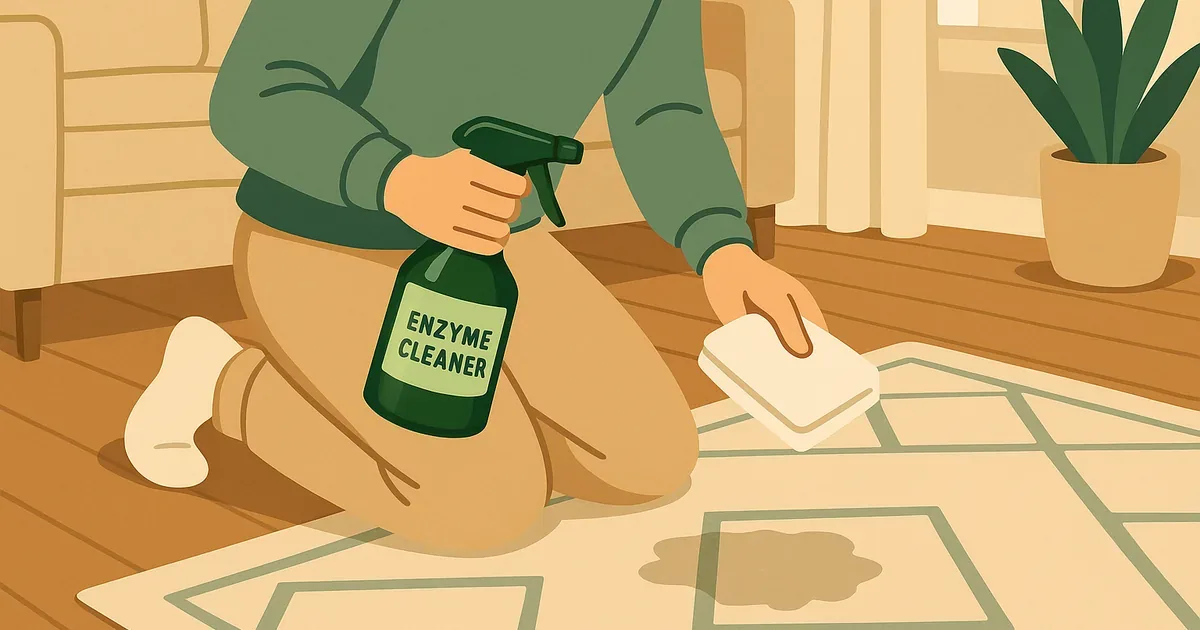
How to Remove Pet Stains From Rugs With Enzymes
Rugs aren't carpets. You can flip them and soak them. Learn how to use enzyme cleaners on wool, synthetic, and oriental rugs step by step.
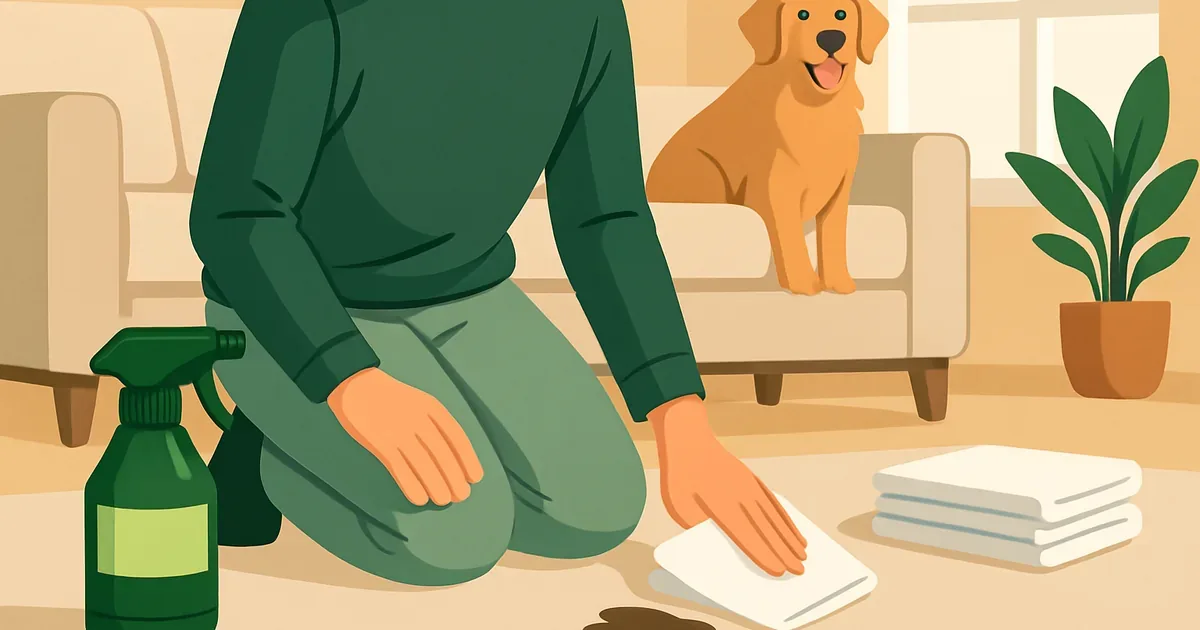
How to Remove Pet Stains and Odors (Every Surface)
Surface-by-surface methods for removing pet stains and odors with enzyme cleaners. Covers carpet, hardwood, tile, and more.
How to Disinfect Carpet: What Actually Works
Most disinfectants are only registered for hard surfaces, so carpet is a different job. Here's what cleaning, sanitizing, and disinfecting really mean.
Cleaning Product Researcher
Sarah Chen is a pen name for our lead product researcher. A lifelong dog person who now shares her home with two cats, she's no stranger to enzyme cleaners. She writes the guides and reviews on this site based on product research, ingredient analysis, and real user feedback.