How to Clean a Mattress with Enzyme Cleaner (2026)
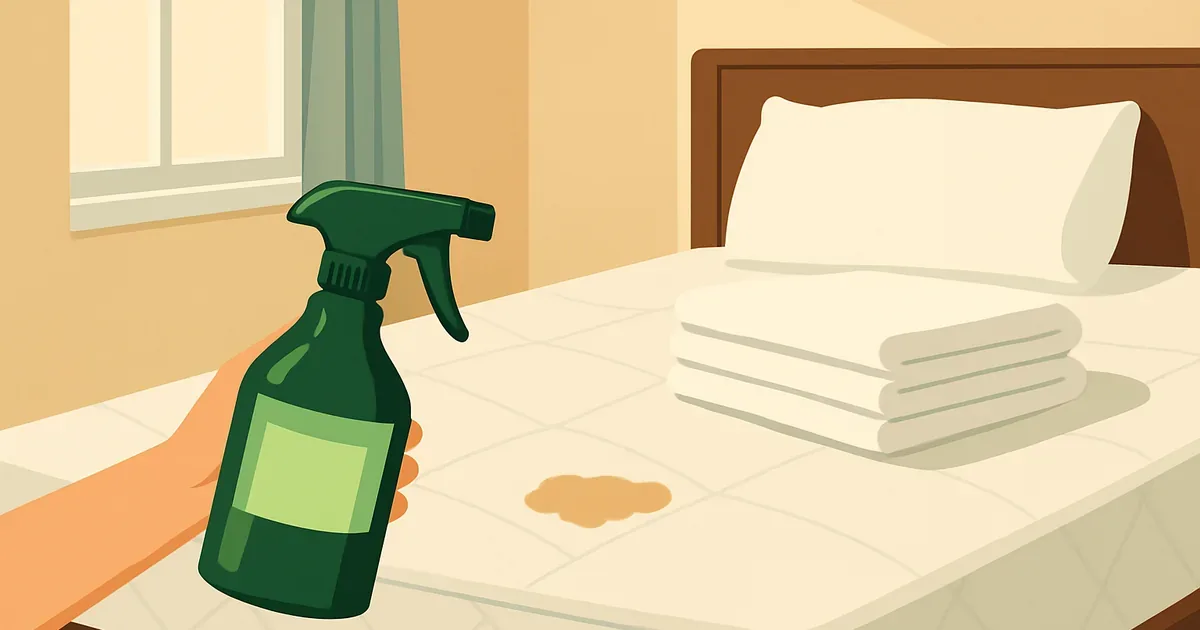
Table of Contents
Enzyme cleaners are the best tool for removing organic mattress stains like urine, sweat, and blood. They break down the proteins that cause the stain and the odor, not just cover them up. But here’s the step most people skip: saturation depth. Your enzyme cleaner needs to soak as deep as the stain went, or it won’t reach the source of the problem.
This guide covers the full cleaning process, how to adjust for your mattress type, which stains respond well to enzymes, and how to prevent future stains. If you’re not sure how enzyme cleaners work, start there for the basics.
Affiliate Disclosure: This page contains affiliate links. When you purchase through our links, we may earn a commission at no additional cost to you. Full disclosure.
What you’ll need
Gather these supplies before you start:
- Enzyme cleaner (spray bottle or concentrate)
- Clean white cloths or paper towels
- Plastic wrap or a garbage bag
- Spray bottle (if using concentrate)
- Fan or open window for drying
- Baking soda (for the drying phase)
That’s it. No special equipment needed. If you’re dealing with a urine stain specifically, our guide on removing urine stains with enzyme cleaners goes deeper into that process.
Step-by-step mattress cleaning with enzyme cleaner
-
Strip the bed and blot. Remove all sheets, mattress pads, and blankets. If the stain is still wet, press clean white cloths into it to absorb as much liquid as you can. Don’t rub. Rubbing pushes the stain deeper into the mattress.
-
Apply enzyme cleaner generously. This is where most people go wrong. A light surface spray won’t reach a stain that soaked an inch into the foam or padding. Spray or pour enough product to match the stain’s depth. The cleaner has to reach everywhere the stain went.
-
Cover and wait. Lay plastic wrap over the treated area. Enzymes only work while the surface stays moist. The plastic keeps the cleaner from evaporating too fast. For fresh stains, wait 1-2 hours. For set-in stains, wait 8-24 hours.
-
Blot and dry. Remove the plastic wrap. Blot up excess moisture with clean cloths. Sprinkle a layer of baking soda over the damp area to absorb remaining moisture. Let the mattress air dry completely. A fan pointed at the spot or an open window speeds this up.
-
Vacuum and inspect. Vacuum up the baking soda once the mattress is fully dry. Check for any remaining stain or odor. If you still notice either one, repeat the process from step 2.
💡 Overnight Treatment Works Best
Apply the enzyme cleaner before bed, cover it with plastic, and sleep somewhere else for the night. This gives the enzymes a full 8-10 hours of contact time without interruption. Most set-in stains clear up after one overnight treatment.
How to Clean a Mattress with Enzyme Cleaner
Blot the stain
Press clean cloths firmly into the mattress to absorb as much liquid as possible.
Spray enzyme cleaner
Apply enough to cover the stain but don't over-saturate. Use a spray bottle for control.
Cover with plastic wrap
Keeps enzymes moist and active. Fresh stains: 1-2 hours. Set-in: 8-24 hours.
Blot and apply baking soda
Remove plastic, blot excess. Sprinkle baking soda to absorb remaining moisture.
Vacuum and inspect
Vacuum baking soda once fully dry. Repeat from step 2 if stain or odor remains.
Adjusting for your mattress type
Not all mattresses handle moisture the same way. The cleaning process stays the same, but the amount of product and drying time change depending on what’s inside your mattress.
Memory foam mattresses
Memory foam absorbs liquid and holds it for a long time. That’s the main risk. Too much moisture sitting inside the foam can damage it or encourage mold growth.
Here’s how to adjust:
- Use a spray bottle for controlled application. Don’t pour cleaner directly onto memory foam.
- Apply in light, even coats rather than one heavy soak.
- Allow 24-48 hours to dry fully. Memory foam dries much slower than innerspring mattresses.
- Point a fan directly at the treated spot the entire time it’s drying.
⚠️ Don't Soak Memory Foam
Excess liquid can break down the foam structure and create conditions for mold. Use the minimum amount of enzyme cleaner needed to reach the stain. Multiple light applications work better than one heavy pour on memory foam.
Innerspring and hybrid mattresses
These are more forgiving with moisture. Air circulates through the coil system, which helps the mattress dry faster.
- You can apply enzyme cleaner more generously than on memory foam.
- Still match saturation depth to stain depth. A deep stain needs more product.
- Prop the mattress on its side during drying if possible. This lets gravity pull moisture down and out.
- Drying time is typically 12-24 hours with good airflow.
Pillow-top and Euro-top mattresses
The extra padding layer on top traps stains deeper than a standard mattress surface. Urine or spills soak into that thick cushion layer and sit there.
- Focus enzyme cleaner on the pillow-top layer first. That’s where most of the stain lives.
- You may need a second application after the first one dries. The extra padding absorbs more product.
- Check both sides of the pillow-top if it’s removable. Stains can wick through to the bottom.
Mattress Type Treatment Differences
| Factor | Memory Foam | Innerspring | Pillow-Top |
|---|---|---|---|
| Application | Spray bottle only | Spray or light pour | Focus on pillow-top layer |
| Amount | Light, even coats | Standard saturation | May need extra product |
| Drying time | 24-48 hours | 12-24 hours | 24+ hours |
| Mold risk | Higher | Lower | Moderate |
| Repeat needed? | Often yes | Sometimes | Often yes |
Common mattress stains enzyme cleaners handle
Enzyme cleaners work on organic stains, meaning anything that comes from a living source. Here are the most common mattress stains they handle well.
- Urine (children, elderly, pets): The most common reason people search for mattress cleaning help. Enzyme cleaners break down uric acid, which is the compound that causes both the stain and the lingering smell. For a deeper guide, see our article on removing urine stains with enzyme cleaners.
- Sweat and body oils: Those yellow stains that build up over months and years. Protease enzymes target the protein compounds in sweat. These stains respond well to enzyme treatment, though older ones may need two rounds.
- Blood: Fresh blood responds quickly to enzyme cleaners. One application usually does it. Set-in blood stains may need two treatments with 8-12 hours of contact time each. See our enzyme cleaner for blood stains guide for the full process. The American Red Cross recommends always using cold water on blood before any cleaning product.
- Vomit: Remove solids first with a cloth or scraper. Then treat the residual stain and smell with enzyme cleaner. The enzymes break down the organic compounds left behind.
For pet-specific accidents, check our picks for enzyme cleaners for pet accidents.
The saturation rule most people get wrong
This is the single biggest reason mattress cleaning fails. It’s simple, but almost nobody does it right.
The enzyme cleaner must penetrate to the same depth as the original stain.
If someone urinated on a mattress and it soaked 2 inches into the foam, a surface spray won’t touch it. The uric acid crystals are sitting 2 inches deep, and your cleaner is sitting on top. They never meet. The stain stays. The smell stays.
Here’s what to do instead:
- For deep stains, pour the cleaner rather than spray it. Let gravity pull the product down into the mattress.
- Use enough product to match the original volume of the stain. If a large amount of urine soaked in, you need a large amount of cleaner to reach it.
- Cover with plastic wrap to keep enzymes active while they work deep inside the mattress.
- Be patient. Deep stain treatment takes hours, not minutes. The enzymes need sustained contact time at the depth where the stain is.
This is why enzyme cleaning a mattress is different from wiping a kitchen counter. The stain isn’t on the surface. It’s inside the mattress. Your cleaner has to go there too.
ℹ️ The Plastic Wrap Step Matters
Enzymes are biological molecules. They stop working the moment they dry out. Plastic wrap keeps the treated area moist for hours. Without it, the enzyme cleaner evaporates in 1-2 hours on a mattress surface, well before it can break down a deep stain.
⚠️ Never Use Bleach on a Mattress
Bleach can damage mattress fabrics, discolor surfaces, and leave harmful residues in a place where you sleep. It also deactivates enzyme cleaners on contact. Stick with enzyme-based products for mattress stains. They’re gentler on materials and won’t leave irritating chemical residues.
Preventing future mattress stains
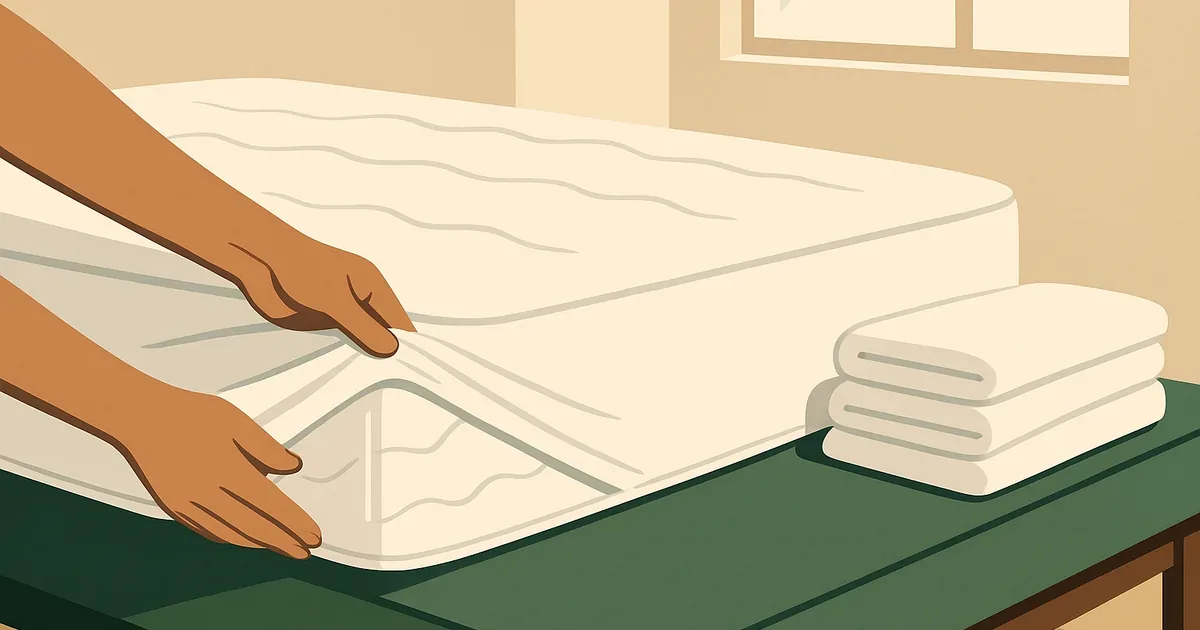
Cleaning a mattress takes effort. A waterproof mattress protector makes sure you rarely have to do it again.
- Waterproof mattress protectors cost $20-40 (at time of writing) and save you from replacing a $500+ mattress.
- Look for protectors that are waterproof but breathable. Fully waterproof protectors trap heat. A breathable version blocks liquid while still letting air through. The Sleep Foundation has recommendations on mattress care.
- Wash the protector monthly along with your sheets. Most are machine-washable.
- Replace the protector every 2-3 years or when it stops repelling liquid (the waterproof layer wears down over time).
For anyone with young children, elderly family members, or pets on the bed, a protector is worth every dollar. It’s much easier to wash a protector than to enzyme-treat a mattress.
You can also apply the same enzyme cleaning approach to other fabric surfaces. Our guide on cleaning upholstery with enzyme cleaners covers couches and chairs, and we have a roundup of enzyme cleaners for carpet and fabric if you need product recommendations.
Wrapping up
Enzyme cleaners are the right tool for mattress stains because they break down organic compounds rather than masking them. The process is straightforward: blot, apply, cover, wait, and dry. The key detail most people miss is saturation depth. Your cleaner has to reach as deep as the stain went.
Adjust your approach based on your mattress type. Go easy on memory foam. Be more generous with innerspring and hybrid mattresses. And once the mattress is clean, put a waterproof protector on it so you don’t have to do this again. For more on enzyme timing, see how long enzyme cleaners take to work. If pet urine is your main concern, check our picks for the best enzyme cleaners for cat urine and dog urine.
Frequently Asked Questions
Can you use enzyme cleaner on a memory foam mattress?
How long should enzyme cleaner sit on a mattress?
Will enzyme cleaner remove yellow sweat stains from a mattress?
Can I spray enzyme cleaner on the whole mattress?
Is enzyme cleaner safe for mattresses?
How do I get urine smell out of a mattress?
Related Articles
What Is an Enzyme Cleaner? How They Work
Enzyme cleaners use biological proteins to break down stains and odors at the molecular level. Learn how they work and find the right one for your job.
How to Remove Urine Stains with Enzyme Cleaners
Step-by-step guide to removing urine stains from carpet, hardwood, tile, and upholstery using enzyme cleaners. Get it right the first time.
Enzyme Cleaner for Blood Stains: What Actually Works
Protease enzymes break down hemoglobin proteins in blood. Cold water is critical. Follow our step-by-step method.
Cleaning Product Researcher
Sarah Chen is a pen name for our lead product researcher. A lifelong dog person who now shares her home with two cats, she's no stranger to enzyme cleaners. She writes the guides and reviews on this site based on product research, ingredient analysis, and real user feedback.