Enzyme Cleaner for Gym Clothes: Kill Sweat Odor
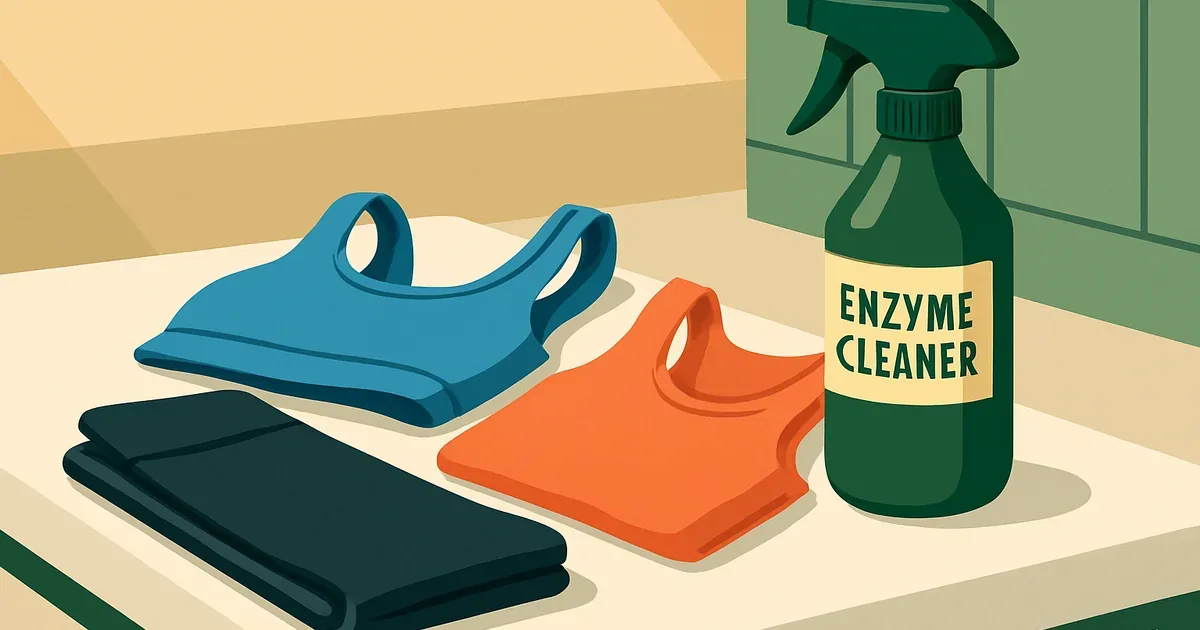
Table of Contents
Enzyme cleaners are the best fix for gym clothes that still smell after washing. Regular detergent can’t reach the bacteria and protein buildup trapped inside synthetic fabrics. Protease enzymes break down those compounds at the source, not just on the surface.
If you’ve tried washing your workout gear multiple times and the smell keeps coming back, the problem isn’t your fabric care routine. It’s the fabric itself. Here’s why that happens and how to fix it with an enzyme-based approach. You might also want to check whether your current detergent actually contains enzymes.
Why gym clothes smell even after washing
Synthetic fabrics like polyester, nylon, and spandex have a different fiber structure than cotton. The fibers are smoother and less absorbent, which sounds like a good thing. But it creates a problem.
Bacteria and body oils get trapped between those tightly woven synthetic fibers. Regular detergent cleans the surface but can’t reach the bacteria embedded deeper in the fabric. The smell returns as soon as you sweat again because the bacteria are still there, waiting for moisture and warmth.
Cotton absorbs sweat and releases it during washing. Synthetic fabrics repel water but hold onto the oils and proteins that bacteria feed on. That’s why your cotton t-shirt might smell fine after one wash while your polyester gym shirt still stinks.
ℹ️ Why Synthetics Hold Odor
Research from textile science labs shows that polyester fibers attract and retain body oil compounds more than cotton. Bacteria cling to these oils and produce the volatile compounds you smell. Enzyme cleaners target both the oils and the bacterial proteins, which is why they work better than regular detergent on synthetic workout gear.
Protease enzymes specifically break down the protein-based compounds causing the smell. To understand the full science behind this, check out our guide on how enzyme cleaners work. Research from NC State’s College of Textiles confirms that synthetic fibers retain odor-causing compounds more than natural fibers.
How to pre-soak gym clothes with enzyme cleaner
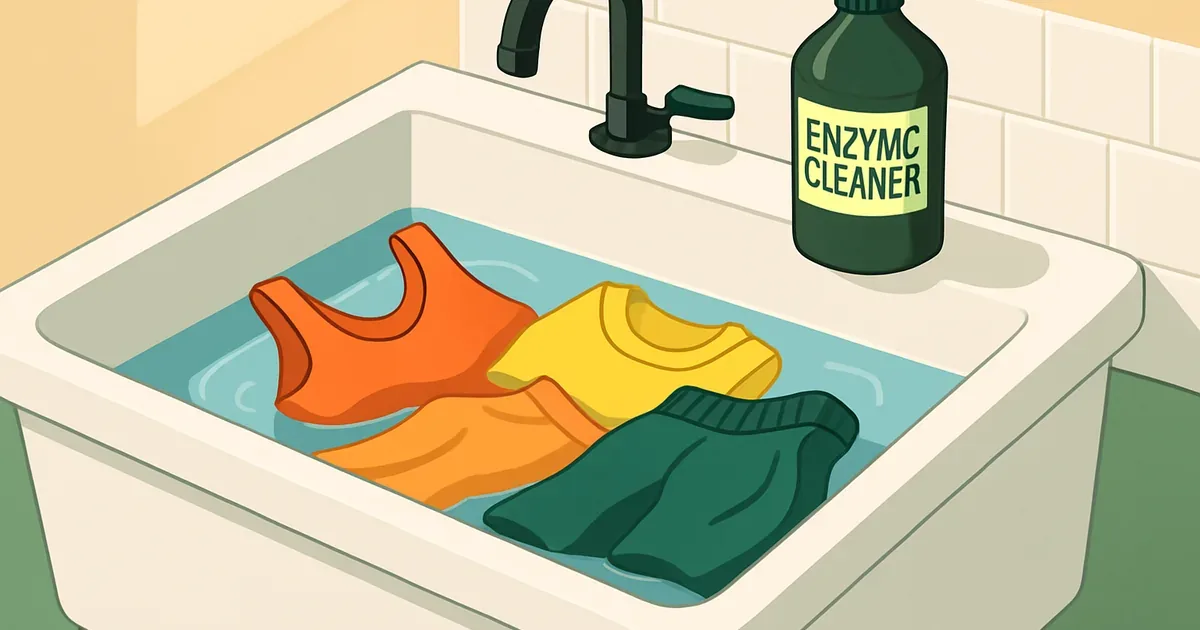
A pre-soak gives the enzymes enough contact time to break down the buildup that regular washing can’t reach. This is the single most effective thing you can do for smelly workout clothes.
The basic pre-soak method
- Fill a basin or sink with cool or lukewarm water. Hot water sets protein stains and can deactivate enzymes. Stick with water under 100F.
- Add enzyme cleaner according to label directions. If using an enzyme laundry booster, follow the pre-soak ratio on the package.
- Turn clothes inside out before soaking. Sweat residue is heaviest on the inside of your clothes, right where they sat against your skin.
- Soak for 30 minutes to 2 hours. Lightly soiled clothes need 30 minutes. Clothes with a stubborn, deep-set funk need closer to 2 hours.
- Wash as normal in the machine. After the soak, toss everything in the washer with your regular detergent. The machine cycle rinses away the broken-down residue.
Compression gear and sports bras
These items trap the most bacteria because they press tightly against your skin. The dense fabric holds onto sweat compounds more stubbornly than loose-fitting workout shirts.
- Soak for 1-2 hours minimum (longer than regular gym clothes)
- Wash in a mesh laundry bag to protect the elastic
- Air dry only. Dryer heat degrades compression fabric and can lock in remaining odor
- Check the product label for any fabric-specific warnings
The inside-out washing technique
This simple trick makes a real difference. Most sweat residue collects on the inside of the garment, the surface that touched your skin. Turning clothes inside out exposes that dirtiest surface directly to water and cleaner.
Combine the inside-out flip with an enzyme pre-soak for the best results. This works for all synthetic workout clothes: leggings, tank tops, shorts, sports bras, and compression sleeves. If you’re interested in making your own enzyme soak solution, see our guide on homemade enzyme cleaner.
💡 Inside-Out Every Time
Make it a habit to flip your gym clothes inside out before they go in the hamper. This way they’re already ready for washing and the dirty side faces outward to air out while they wait for laundry day.
Cleaning workout equipment with enzyme cleaners
Gym clothes aren’t the only things that get funky. Your equipment picks up the same bacteria and sweat compounds, and it rarely gets washed.
Yoga mats
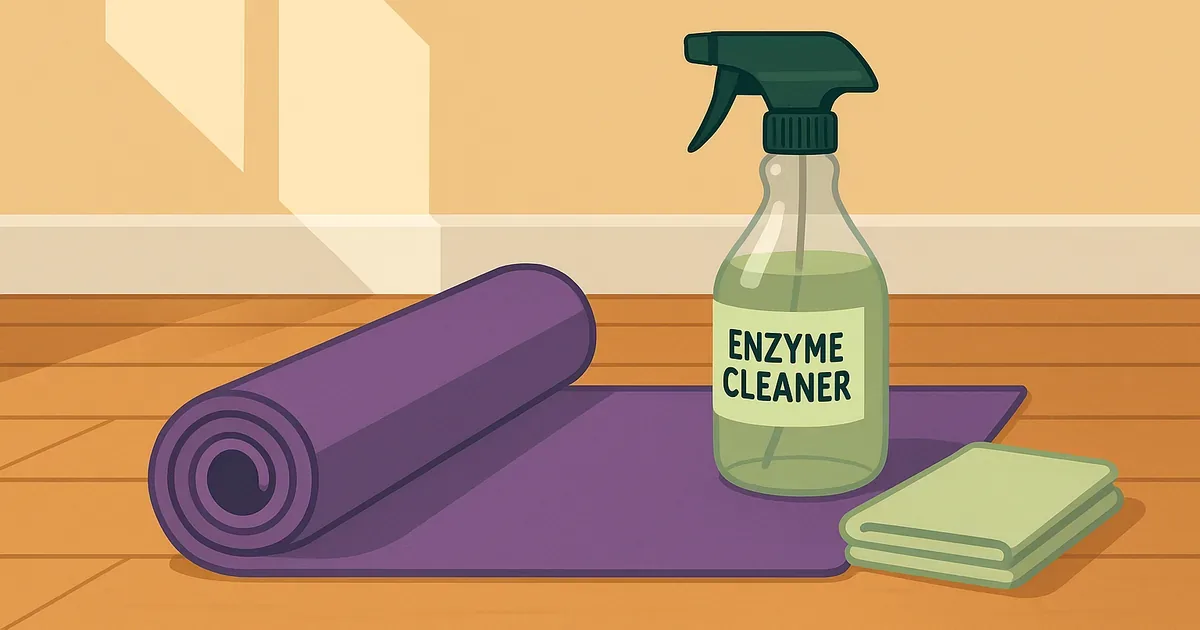
Yoga mats absorb sweat during every session, especially during hot yoga or longer practices.
- Spray with diluted enzyme cleaner solution (follow label directions for surface cleaning)
- Let it sit 10-15 minutes
- Wipe with a damp cloth
- Air dry completely before rolling up (a rolled-up damp mat breeds bacteria fast)
- Do this monthly to prevent buildup
- The same enzyme approach works well for cleaning mattresses and other fabric surfaces
Gym bags and shoes
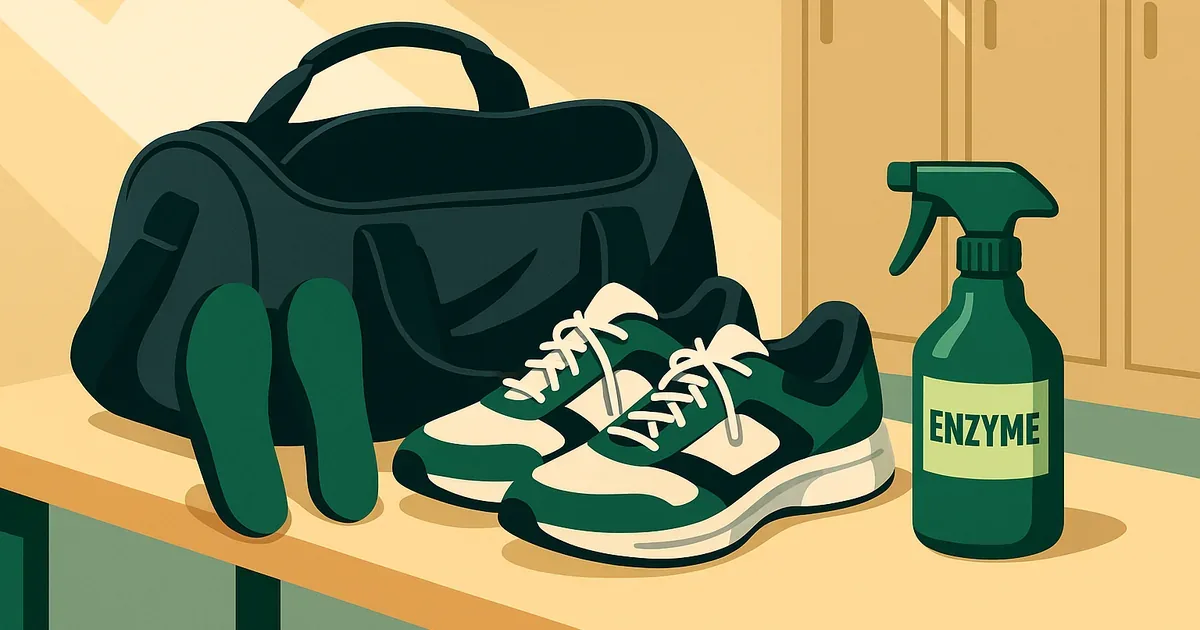
Your gym bag traps moisture and odor every time you toss sweaty clothes into it. Shoes get the worst of it because feet produce more sweat per square inch than almost any other body part.
For gym bags:
- Spray the inside with enzyme cleaner after each use (or at least weekly)
- Leave the bag open to air dry before zipping it shut
- Toss washable bags in the machine with enzyme detergent monthly
For shoes:
- Remove the insoles and treat them separately with enzyme spray
- Spray the inside of each shoe thoroughly
- Stuff with paper towels to absorb moisture
- Let everything air dry completely before wearing again
For the best enzyme laundry products for workout gear, see our picks for the best enzyme cleaners for laundry.
Tips to prevent gym clothes from getting smelly
Cleaning solves the current problem. These habits keep the smell from coming back.
- Don’t leave sweaty clothes sitting for days. A pile of damp workout gear in a closed hamper is a bacteria breeding ground. Wash within 24 hours, or hang to air dry until wash day.
- Use an enzyme-based laundry detergent as your regular detergent. You won’t need the pre-soak step as often if enzymes are part of every wash. Learn more about using enzyme cleaner in your washing machine.
- Skip fabric softener on synthetic workout clothes. Fabric softener coats fibers with a waxy residue that traps bacteria and blocks moisture-wicking.
- Air dry when possible. Heat from the dryer can lock in odors that the wash didn’t fully remove. If you must use a dryer, use the lowest heat setting.
- Rotate your workout clothes. Wearing the same shirt three days in a row gives bacteria a head start. Having a few sets in rotation lets each one fully dry and air out between wears.
⚠️ Skip the Fabric Softener
Fabric softener is the enemy of workout clothes. It leaves a coating on synthetic fibers that traps bacteria, blocks the moisture-wicking properties you paid for, and makes the odor problem worse over time. Use enzyme cleaner or a splash of white vinegar in the rinse cycle instead.
ℹ️ Enzyme Cleaners and Fabric Safety
Enzyme cleaners are generally considered safe for most workout fabrics, including spandex, nylon, and polyester blends. They don’t contain bleach or harsh solvents. Still, spot-test on a hidden seam if you’re treating a high-end piece for the first time.
Wrapping up
Smelly gym clothes aren’t a sign that you need to throw them out. The odor lives in the bacterial buildup trapped in synthetic fibers, and enzyme cleaners are specifically designed to break that down. A 30-minute to 2-hour pre-soak with an enzyme product handles most cases. For stubborn funk, combine the pre-soak with the inside-out washing technique and skip the fabric softener.
The same approach works for yoga mats, gym bags, and shoes. Anywhere sweat and bacteria accumulate, enzymes can do the work that regular soap can’t. For more on how enzymes compare to other cleaning approaches, read our enzyme cleaner vs vinegar comparison. And if you’re looking for products beyond laundry, check our picks for the best pet stain and odor removers, which use the same enzyme technology.
For choosing products with safer ingredients, the EPA Safer Choice program certifies cleaners that meet health and environmental standards. The EWG’s Guide to Healthy Cleaning also rates product safety.
Frequently Asked Questions
Can I use enzyme cleaner in my washing machine for gym clothes?
What temperature water should I use for enzyme cleaning gym clothes?
Will enzyme cleaner damage spandex or elastic in workout clothes?
How often should I enzyme-soak my gym clothes?
Does enzyme cleaner work on the smell in old gym shoes?
Cleaning Product Researcher
Sarah Chen is a pen name for our lead product researcher. A lifelong dog person who now shares her home with two cats, she's no stranger to enzyme cleaners. She writes the guides and reviews on this site based on product research, ingredient analysis, and real user feedback.