How Long Does Enzyme Cleaner Take to Work? (Times)
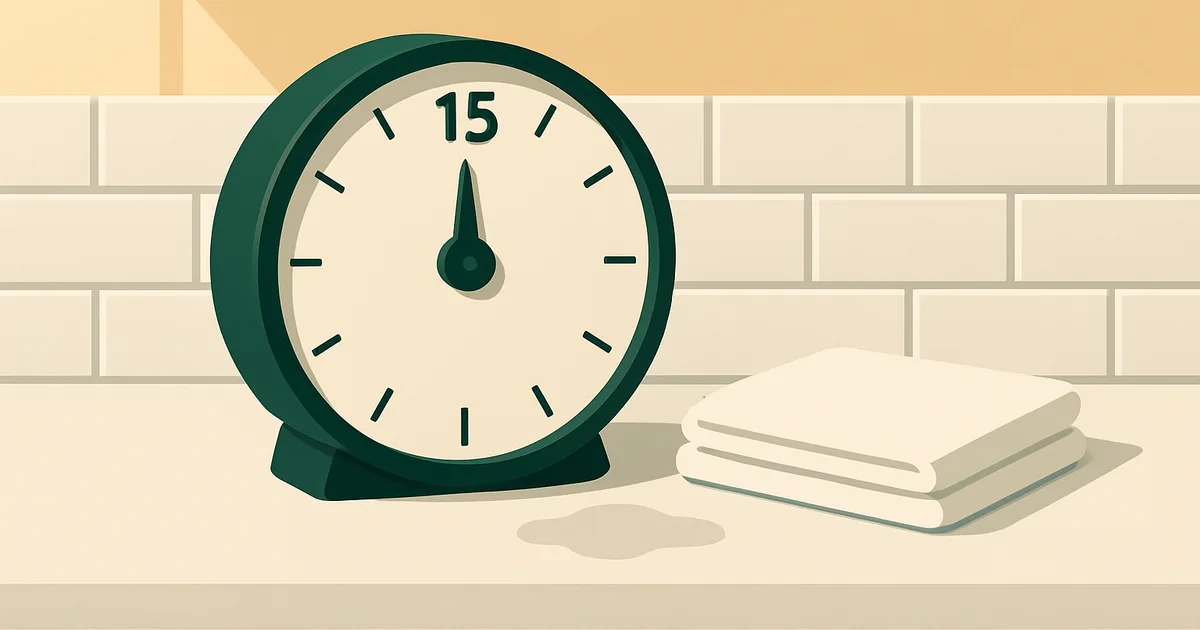
Table of Contents
Most enzyme cleaners need 15 minutes to 24 hours to work, depending on the stain. Fresh pet urine on tile takes about 15-30 minutes. Old cat urine in carpet padding needs 12-24 hours. The four factors that control timing are stain age, surface type, temperature, and how much cleaner you use.
Below you’ll find a contact time lookup table for common stains, plus an explanation of why timing matters so much and how to keep the cleaner active long enough to finish the job.
Contact Time Lookup Table
This table covers the most common cleaning jobs. Find your stain type and surface, then check the minimum time and the time for best results.
| Stain Type | Surface | Minimum Time | Best Results |
|---|---|---|---|
| Fresh pet urine | Hard floor (tile, sealed wood) | 15-30 min | 1 hour |
| Fresh pet urine | Carpet | 30 min - 1 hour | 2-4 hours |
| Fresh pet urine | Upholstery | 1-2 hours | 4-8 hours |
| Set-in pet urine | Carpet | 8-12 hours | 24 hours |
| Set-in pet urine | Concrete / subfloor | 12-24 hours | 24-48 hours |
| Vomit / food stains | Any surface | 15-30 min | 1-2 hours |
| Blood stains | Fabric | 30 min - 1 hour | 2-4 hours |
| Drain buildup | Drain | 6-8 hours (overnight) | 12+ hours |
| Mildew / organic odor | Any surface | 2-4 hours | 8-12 hours |
These are general ranges. Always check your product’s label for specific instructions.
💡 Longer Is Better
When in doubt, leave the enzyme cleaner on longer. Enzymes stop working on their own once they run out of organic matter to break down. You can’t over-treat a stain by leaving the cleaner on too long (with the exception of unsealed wood, which can warp from prolonged moisture).
For the full technique on removing urine stains, see our guide on removing urine stains step by step.
The 4 Factors That Control How Fast Enzyme Cleaners Work
If you understand how enzyme cleaners work, the timing differences make sense. Here are the four variables that matter most.
1. Stain Age
This is the biggest factor. Fresh stains break down fast because the organic matter hasn’t bonded fully to the surface yet.
- Fresh stains (under 24 hours): Enzymes can reach and break down the organic material quickly. Expect results in 15 minutes to a few hours.
- Set-in stains (days to weeks): Chemical bonds have formed between the stain and the surface material. The enzymes need more time and more product to work through those bonds.
- Old stains (months or longer): Oxidation changes the stain chemistry. Enzymes still help, but you’ll likely need multiple applications with extended soak times.
For tough old stains, check our guide on enzyme cleaners on set-in stains.
2. Surface Type
How porous the surface is determines how deep the stain goes and how long the cleaner needs to reach it.
- Hard, non-porous surfaces (tile, sealed wood, laminate): Fastest results. The stain sits on top, so the cleaner makes contact immediately.
- Porous surfaces (carpet, fabric, unsealed wood): The stain soaks in, so the cleaner needs to penetrate to the same depth. This takes longer. The Carpet and Rug Institute recommends allowing extra dwell time on deep-pile carpet.
- Foam and padding: Slowest. The cleaner has to soak all the way through thick, absorbent material.
For carpet-specific timing and techniques, see our guide on using enzyme cleaner on carpet.
3. Temperature
Enzymes are proteins, and like all proteins, they’re affected by temperature. As the NCBI enzyme reference explains, enzyme activity depends heavily on environmental conditions.
- 70-85 degrees F: The sweet spot. Enzymes are most active in this range.
- Below 50 degrees F: Enzyme activity slows significantly. The cleaner still works, but it takes longer.
- Above 120 degrees F: Enzymes start to break down and lose effectiveness permanently.
Room temperature works fine for most jobs. If you’re cleaning in a cold garage or outdoor area, expect longer processing times. Don’t try to speed things up with hot water. It does more harm than good.
⚠️ Never Use Hot Water
Water above 120 degrees F destroys enzymes permanently. Use lukewarm or cool water when pre-dampening a stain or diluting a concentrate. Once the enzymes are deactivated by heat, no amount of extra soak time will bring them back.
4. Concentration and Coverage
Using enough product matters just as much as contact time.
- Saturate, don’t mist. The cleaner needs to fully cover the stain at the same depth the stain reached.
- Diluted formulas need longer. If you’re using a concentrate mixed with water, a weaker dilution ratio means more contact time is needed.
- Deep stains need deep coverage. If pet urine soaked through carpet into the padding, a light spray on the carpet surface won’t reach the problem.
How to Keep Enzyme Cleaner Active Longer
The number one mistake people make with enzyme cleaners: letting them dry out before the job is done. Enzymes stop working the moment the surface dries. Every minute of dry time is wasted time.
Here’s how to keep the cleaner working:
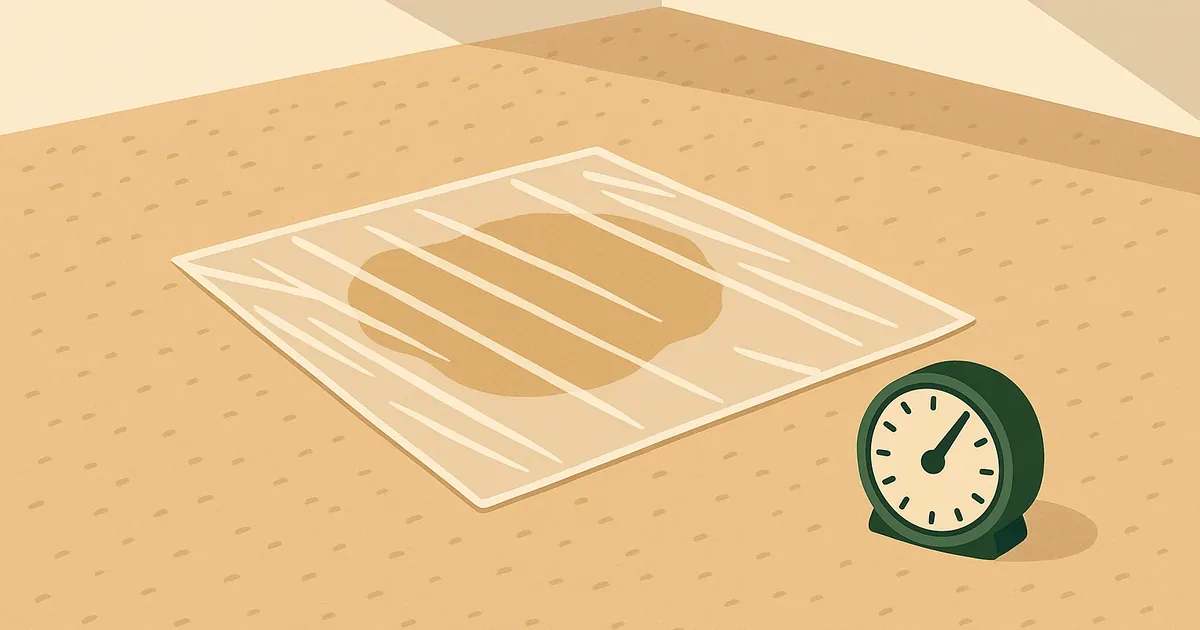
- Cover treated areas with plastic wrap, a damp cloth, or an inverted bowl
- For overnight treatments, check moisture levels before bed and re-mist if needed
- Don’t mix with other cleaners. Vinegar, bleach, and ammonia all deactivate enzymes on contact
- Re-apply if the area dries before the recommended soak time is up
ℹ️ The Plastic Wrap Trick
For carpet and upholstery stains that need 8+ hours of contact time, lay plastic wrap over the treated area. This traps moisture and keeps the enzymes active for the full soak period. Tape the edges down to prevent air from getting underneath.
How to Tell When the Enzyme Cleaner Has Finished Working
You’ll know the treatment worked when:
- The visible stain is gone or significantly lighter
- The odor is gone (not just masked by fragrance)
- The area is fully dry and the smell doesn’t return
- For urine stains: a UV blacklight test shows no remaining fluorescence
If the smell comes back when the area gets humid or warm, the enzymes didn’t reach all of the stain. That usually means the cleaner dried out too soon or didn’t penetrate deep enough. Repeat the treatment with more product and longer soak time. For pet odor specifically, see our best enzyme cleaners for pet odors list.
💡 The UV Blacklight Test
For urine stains, a UV flashlight is the best way to confirm the enzyme treatment worked. Wait until the area is fully dry, darken the room, and scan with a 365nm UV light. If the stain still glows yellow-green, retreat with more product and longer soak time.
When Enzyme Cleaners Won’t Work (No Matter How Long You Wait)
Enzyme cleaners only break down organic matter. There are situations where no amount of contact time will help:
- Heat-set stains: If you’ve steam cleaned, used hot water, or run the item through a dryer, heat can permanently bond the stain to the surface. Enzymes struggle with these.
- Sealed or waxed surfaces: Coatings that block the cleaner from reaching the stain underneath will prevent enzymes from making contact.
- Inorganic stains: Rust, mineral deposits, paint, and ink aren’t organic. Enzymes don’t target them.
- Severe structural contamination: Urine-saturated subfloors, mold inside walls, or large-scale contamination usually needs professional remediation. The EPA’s mold cleanup guide covers when to call a professional.
For DIY options, you can try making a homemade enzyme cleaner, but keep in mind that homemade versions are much less concentrated and need significantly longer contact times than commercial products. For drain-specific timing, check out our best enzyme drain cleaners roundup. And for a comparison of enzyme cleaners against other cleaning methods, see enzyme cleaner vs vinegar.
Frequently Asked Questions
Can you leave enzyme cleaner on too long?
Why does my enzyme cleaner seem like it's not working?
Do I need to rinse enzyme cleaner off after it dries?
Does warm water make enzyme cleaner work faster?
How long should I leave enzyme cleaner in a drain?
Related Articles
Is OdoBan an Enzyme Cleaner? What the EPA Label Says
No. OdoBan's active ingredient is a quaternary ammonium compound, not an enzyme. We read the EPA label to see what it does and where it applies.
How to Disinfect Carpet: What Actually Works
Most disinfectants are only registered for hard surfaces, so carpet is a different job. Here's what cleaning, sanitizing, and disinfecting really mean.
How to Get Rid of Drain Flies (What Actually Works)
Drain flies breed in the slime inside your pipes, so bleach won't fix it. Here's what actually removes them, and how long it takes to work.
Cleaning Product Researcher
Sarah Chen is a pen name for our lead product researcher. A lifelong dog person who now shares her home with two cats, she's no stranger to enzyme cleaners. She writes the guides and reviews on this site based on product research, ingredient analysis, and real user feedback.