How to Clean a Garbage Disposal With Enzyme Cleaner
Table of Contents
Pour enzyme cleaner into your garbage disposal, let it sit 15-30 minutes (or overnight for bad odor), then flush with cold water. The enzymes dissolve the food biofilm coating the inside of the disposal that causes the smell. Do this weekly to keep odor from coming back.
Affiliate Disclosure: This page contains affiliate links. When you purchase through our links, we may earn a commission at no additional cost to you. Full disclosure.
Below, we cover the step-by-step cleaning method, a clever ice cube trick for hard-to-reach areas, a weekly maintenance schedule, and which products work best. If you’re new to this type of cleaner, our guide explains what enzyme cleaners are and how they work.
Why Your Garbage Disposal Smells
Running the disposal doesn’t actually clean it. The blades grind food, but they don’t reach the walls, the underside of the splash guard, or the drain pipe below the unit. Food particles stick to all of those surfaces.
Bacteria feed on that food residue and form biofilm. Biofilm is the slimy coating you can sometimes feel on the inside walls of the disposal. It resists regular rinsing and gets worse over time. That’s where the smell comes from.
ℹ️ Note
Running the disposal doesn’t clean it. Food residue clings to surfaces the blades don’t reach, including the splash guard, the inner walls, and the drain pipe below the unit. That’s where biofilm forms and odor starts.
Even running hot water after each use only removes loose debris on the surface. The biofilm underneath stays put and keeps producing that sour, rotten smell.
How Enzyme Cleaners Work in Garbage Disposals
Enzyme cleaners contain specific enzymes that break down the organic compounds in food residue:
- Lipases break down fats and grease
- Proteases break down proteins (meat, eggs, dairy)
- Amylases break down starches (pasta, bread, rice)
These enzymes dissolve the biofilm that causes odor without harsh chemicals. They’re safe for disposal components, all pipe types, and septic systems. The EPA Safer Choice program certifies many enzyme cleaners as meeting safety standards. That makes them a better long-term choice than bleach or chemical drain cleaners, which can corrode metal and rubber gaskets over time.
For a deeper look at enzyme drain products, check our roundup of the best enzyme drain cleaners.
Step-by-Step: Cleaning Your Garbage Disposal With Enzymes
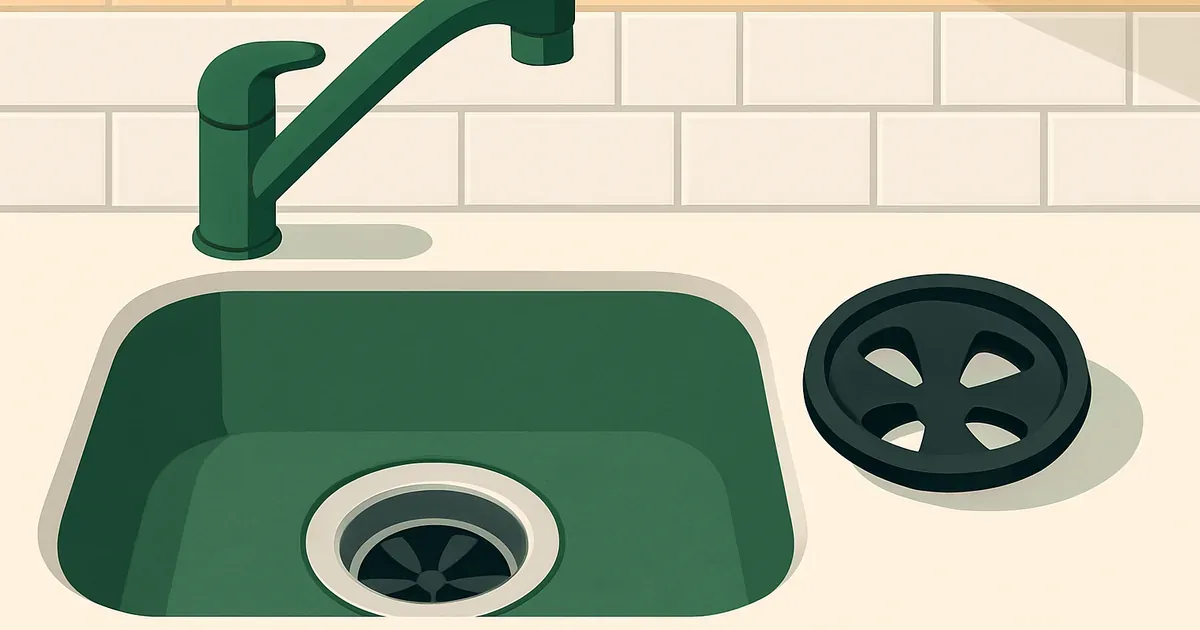
Follow these steps for a thorough cleaning. For a disposal that already smells, start with the overnight soak in Step 4.
- Turn off the disposal and unplug it (or flip the breaker). Safety first. You don’t want the disposal activating while your hand is near it.
- Clean the splash guard manually. Pull the rubber splash guard up and scrub the underside with a brush dipped in enzyme cleaner. This area traps the most food residue and is the biggest odor source.
- Pour 2-4 oz of enzyme cleaner into the disposal. Let it flow down the walls and pool in the bottom.
- Let it sit 15-30 minutes. For strong odor, let it sit overnight. The longer the enzymes stay in contact with the biofilm, the more they break down.
- Flush with cold water while running the disposal for 30 seconds. This rinses away the broken-down residue.
⚠️ Warning
Never pour boiling water after enzyme treatment. Heat kills the enzymes before they finish working. Use cold or lukewarm water only. This applies to all enzyme-based cleaning, not just garbage disposals.
The Ice Cube and Enzyme Trick
This is our favorite maintenance technique. It handles the hard-to-reach areas that manual cleaning misses.
Here’s how it works:
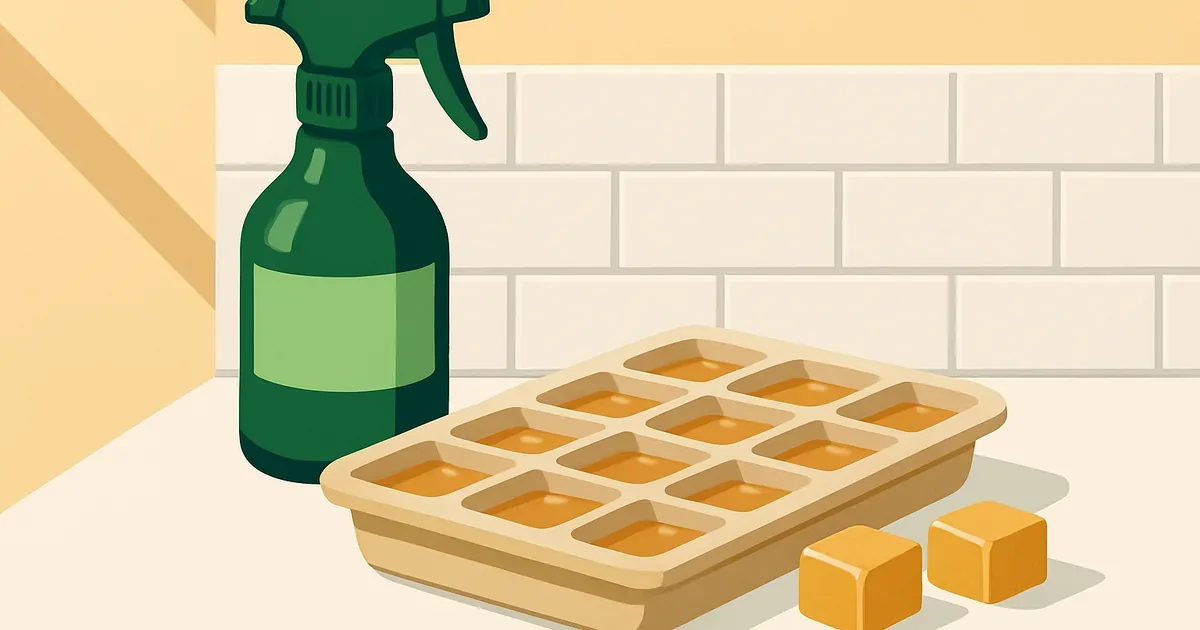
- Dilute enzyme cleaner at a 1:3 ratio with water
- Pour the diluted solution into ice cube trays and freeze
- Drop 4-5 enzyme ice cubes into the garbage disposal
- Run the disposal for 15-20 seconds
The ice scrubs the walls and splash guard while the enzyme solution coats every surface as it melts. It’s a two-in-one approach: mechanical scrubbing from the ice plus enzymatic cleaning from the solution.
Do this every two weeks as part of your regular maintenance. You can make a batch of enzyme ice cubes and keep them in a labeled freezer bag for easy access.
Weekly Maintenance Schedule
Consistency is the key to keeping your disposal smell-free. Here’s a simple schedule:
- Monday: Run an enzyme cleaner soak (15-30 minutes)
- Wednesday: Drop in 4-5 enzyme ice cubes and run the disposal
- Daily: Run the disposal with cold water for 30 seconds after each use
- Monthly: Deep clean with an overnight enzyme soak
💡 Tip
Set a phone reminder for your weekly enzyme treatment. Consistent maintenance is easier than dealing with a bad smell once it builds up. A quick 15-minute soak every Monday prevents the biofilm from getting established.
This schedule takes less than 5 minutes per week. Most of the time is just waiting for the enzymes to sit. If your disposal connects to a septic system, enzyme cleaners are a good fit since they’re safe for septic systems and even help maintain healthy bacterial levels in the tank. The EPA’s septic care guide confirms that enzyme-based products support healthy septic function.
Best Enzyme Cleaners for Garbage Disposals
Any quality enzyme cleaner works for garbage disposals, but these products are especially well-suited:
- Best overall: Biokleen Bac-Out, ~$13.49 (32 oz). Plant-based formula, no artificial fragrances, safe for all pipe types.
- Best for heavy buildup: Rocco & Roxie Professional Strength, ~$19.97 (32 oz). Strong enzyme formula for severe odor.
- Best value: Nature’s Miracle Advanced, ~$12.99 (32 oz). Good enzyme concentration at a mid-range price.
Prices reflect listings at time of writing and may change.
For a full comparison of drain-specific products, see our guide to the best enzyme drain cleaners. And if your bathroom drains need attention too, we cover those in our guide to enzyme cleaner for bathroom drains.
Garbage Disposal Maintenance Schedule
Daily
- • Run cold water before, during, and after use
- • Avoid putting grease or fibrous foods down the drain
Weekly
- • Enzyme cleaner treatment: pour 2-4 oz, let sit overnight, flush in morning
Monthly
- • Deep clean: peel back splash guard, scrub underside, full enzyme soak
As needed
- • Ice cube run to knock off buildup from blades
- • Lemon or citrus peel for quick freshening
ℹ️ Note
Enzyme cleaners also work well for kitchen cooking odors beyond just the disposal. If your kitchen has lingering food smells from frying or cooking fish, the same enzymatic approach breaks down those odor molecules.
What Enzyme Cleaners Can’t Fix
Enzyme cleaners are great for organic buildup and odor, but they won’t fix everything:
- Mechanical problems. If your disposal is jammed or grinding poorly, that’s a hardware issue. Enzymes won’t fix stuck blades.
- Pipe blockages from non-food items. Grease clogs and food biofilm respond well to enzymes. A fork stuck in the pipe does not.
- Instant results. Enzymes work over time, not immediately. If you need the smell gone right now, baking soda provides a quick temporary fix while enzymes do the real work overnight.
For persistent drain issues beyond the disposal, enzyme drain cleaners can handle buildup in the pipes further downstream. The same enzymes that clean your disposal work throughout the drain system. You can learn more about enzyme biology from the NCBI’s enzyme reference.
If drain flies are also a problem, enzyme cleaners address them too. See our guide on enzyme drain cleaners for drain flies.
Frequently Asked Questions
Can you put enzyme cleaner in a garbage disposal?
How often should you enzyme clean a garbage disposal?
Will enzyme cleaner damage garbage disposal blades?
Why does my garbage disposal smell even after cleaning?
Can I use baking soda and vinegar instead of enzyme cleaner?
Related Articles
Cleaning Product Researcher
Sarah Chen is a pen name for our lead product researcher. A lifelong dog person who now shares her home with two cats, she's no stranger to enzyme cleaners. She writes the guides and reviews on this site based on product research, ingredient analysis, and real user feedback.