Enzyme Cleaner for Blood Stains: What Actually Works
Table of Contents
Enzyme cleaners with protease are the best option for blood stains. Protease enzymes break down hemoglobin, the protein that makes blood stick to fabric and surfaces. The single most important rule: always use cold water. Hot water cooks the proteins in blood and permanently sets the stain into the fibers.
This guide covers why enzyme cleaners work on blood, the science behind the cold water rule, step-by-step removal for fresh and dried blood, and which products perform best. If you want the full background on how enzyme cleaners break down protein-based stains, start there.
Affiliate Disclosure: This page contains affiliate links. When you purchase through our links, we may earn a commission at no additional cost to you. Full disclosure.
Why enzyme cleaners work on blood (the science)
Blood isn’t like a coffee spill or a grass stain. It’s a protein stain, and that matters for how you clean it.
Blood is a protein stain
Blood contains hemoglobin and other proteins that bind tightly to fabric fibers. These proteins form strong molecular bonds with textile materials, which is why blood stains are so stubborn.
Regular detergents can lift surface blood, but they leave protein residue behind. That residue causes faint stains that darken over time, especially if exposed to heat. According to textile science research from NC State University’s College of Textiles, protein-based stains require enzymatic action or oxidizing agents for complete removal from fabric fibers.
Protease enzymes break down hemoglobin
Protease is the specific enzyme type that targets protein bonds. It cuts hemoglobin molecules into smaller peptides that dissolve in water and rinse away easily.
This is the same enzyme type found in many laundry detergents for handling food stains and sweat. Protease is one of the most widely used industrial enzymes, with applications across cleaning, food processing, and medical fields, according to research published in Biotechnology Research International.
ℹ️ Not All Enzyme Cleaners Have Protease
Pet urine formulas often focus on urease and lipase enzymes. For blood stains, check the label specifically for protease or “protein-digesting enzymes.” A product designed for pet urine may not contain enough protease to handle a blood stain effectively.
The cold water rule (don’t skip this)
This is the most important thing in this entire guide. Use cold water on blood. Always.
Hot water denatures blood proteins. Denaturation changes the protein’s structure, causing it to bond permanently to fabric fibers. It’s the same process that turns a raw egg white from clear liquid to solid white when you cook it. Once that molecular change happens, it can’t be reversed.
Here’s the practical version:
- Cold water first, before anything else. Rinse the stain under cold running water to flush out as much blood as possible.
- Never use warm or hot water on a blood stain until the stain is completely gone.
- Skip the dryer until you’ve confirmed the stain is removed. The heat from a dryer will set any remaining blood permanently.
The American Red Cross recommends cold water rinsing as the first step for any blood cleanup on fabrics and clothing.
⚠️ Heat Sets Blood Stains Permanently
If you’ve already washed a blood-stained item in hot water or run it through a hot dryer, the stain is likely permanent. An enzyme cleaner may lighten it, but full removal is unlikely once the proteins have been heat-set. Prevention is everything here: cold water first, every time.
How to remove blood stains with enzyme cleaner
The approach depends on whether the blood is still fresh or has dried.
Fresh blood (still wet or damp)
Fresh blood is the easiest to remove. Act fast and you’ll probably get it out in one pass.
-
Rinse with cold water. Hold the fabric under cold running water. Flush as much blood out as possible. You’ll see the water running pink, then lighter, then clear. Keep going until the water runs mostly clear.
-
Apply enzyme cleaner. Spray or pour an enzyme cleaner with protease directly onto the remaining stain. Saturate it fully. The enzymes need direct contact with the blood proteins to work.
-
Wait 15-30 minutes. Let the enzyme cleaner sit on the stain. Keep the area moist. If it starts drying out, spray a little more product on it.
-
Blot and rinse. Blot the area with a clean white cloth, then rinse again with cold water. Check the stain. Fresh blood usually clears in one application.
-
Repeat if needed. If a faint mark remains, apply enzyme cleaner again and wait another 15-30 minutes. One application handles most fresh blood stains.
Dried blood (hours to days old)
Dried blood takes more effort because the proteins have bonded more tightly to the fibers. You need to rehydrate the stain before the enzymes can reach it.
-
Soak in cold water. Submerge the stained area in cold water for at least 30 minutes. This softens and rehydrates the dried blood so the enzymes can access the proteins.
-
Apply enzyme cleaner generously. Use more product than you would on a fresh stain. Dried proteins need more enzyme contact to break down.
-
Cover and wait 2-8 hours. Place a damp cloth over the stain to keep the area moist. On fabric you can’t soak, use plastic wrap. The longer contact time gives the protease enzymes enough time to work through the dried protein bonds.
-
Rinse and inspect. Rinse with cold water and check the stain. You may need a second application for stains that were dried for several days.
-
Launder in cold water. For washable fabrics, run a cold cycle with an enzyme-based laundry detergent (brands like Tide and Persil contain protease). Check the stain before putting it in the dryer.

Best surfaces and fabrics for enzyme treatment
Protease enzymes work on most surfaces, but some materials need extra care.
- Cotton and linen: Respond very well to enzyme cleaners. These plant-based fibers are durable and can handle extended enzyme contact without damage.
- Polyester and synthetics: Good results. Blood tends to sit more on the surface of synthetic fibers, making it easier to remove.
- Wool and silk: Use enzyme cleaners cautiously. Protease enzymes break down proteins, and wool and silk are themselves protein-based fibers. Extended contact can weaken these fabrics.
- Mattresses: Enzyme cleaners work well on mattress blood stains. Apply sparingly to avoid soaking the foam. For a full walkthrough, see our guide on cleaning blood stains from mattresses.
- Carpet: Saturate the stain and cover with plastic wrap to keep the area moist while the enzymes work. Our list of the best enzyme carpet cleaners covers top picks for carpeted surfaces.
💡 Watch the Clock on Delicate Fabrics
For silk or wool, limit enzyme cleaner contact to 15 minutes max. The same protease enzymes that break down blood proteins can also weaken the protein fibers in wool and silk if left too long. Rinse promptly and repeat short applications if needed.
Which products work best on blood
Not every enzyme cleaner is built for blood stains. Look for products that list protease on the label or specifically mention protein stain removal.
Here are a few solid options:
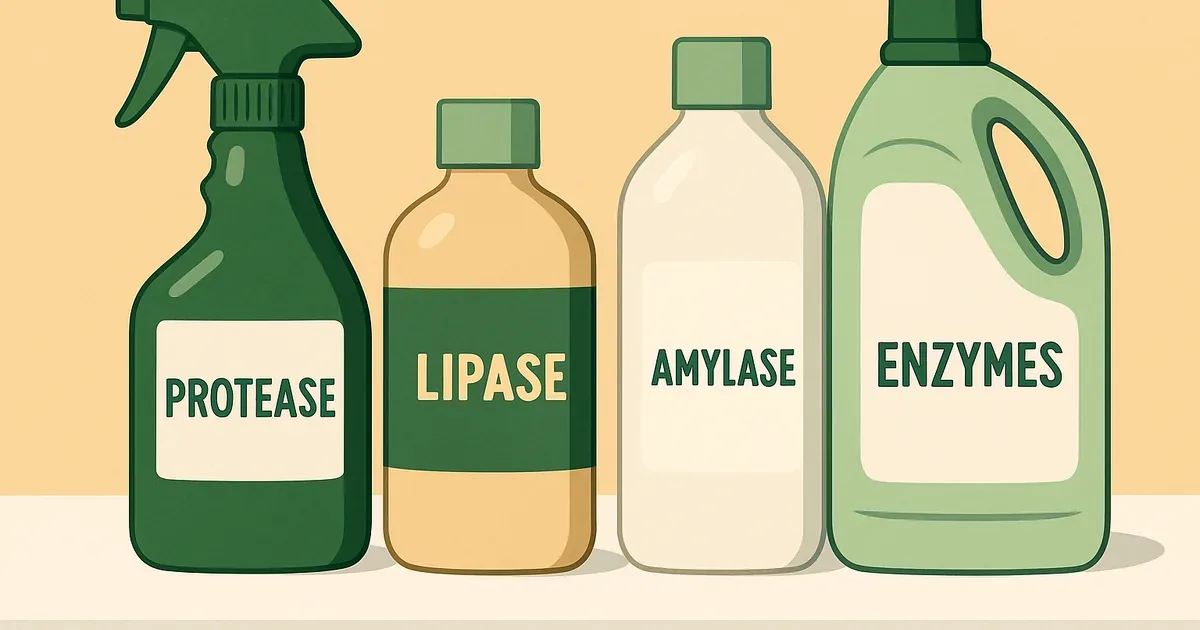
- Enzyme-based laundry detergents (Tide, Persil) contain protease and work well on blood in washable fabrics. You already have the right tool in your laundry room.
- Dedicated enzyme stain sprays with protease on the label give you a concentrated formula you can apply directly to the stain before laundering.
- Pet enzyme cleaners can work on blood if they contain protease. Many pet formulas focus on urease instead, so check the label. Products marketed for “organic stains” or “protein stains” are more likely to contain protease.
For removing other biological stains with enzymes, the same basic technique applies: identify the stain type, pick the right enzyme, use cold water, and give it time.
ℹ️ Laundry Detergent Works Too
Many enzyme-based laundry detergents (like Tide and Persil) already contain protease. For washable fabrics, you can pre-treat with your detergent as a paste, let it sit 15 minutes, then launder on cold. A dedicated enzyme stain spray gives you a stronger concentration for stubborn stains.
Common blood stain scenarios
Blood stains come from everyday life, not just pet accidents. Here’s how to approach the most common situations.
- Nosebleeds on pillowcases and sheets: Strip the bedding right away and rinse under cold water. Apply enzyme cleaner, wait 15-30 minutes, then launder on a cold cycle. Fresh nosebleed stains come out easily.
- Menstrual stains on underwear and bedding: Soak in cold water first, then apply enzyme cleaner. Hydrogen peroxide works too on white fabrics, but enzyme cleaners are safer for colored materials. Keep a spray bottle of enzyme cleaner in the bathroom for quick treatment.
- Minor cuts and scrapes on clothing: Rinse under cold water immediately. If the blood is fresh, cold water alone may be enough. Apply enzyme cleaner for anything that doesn’t flush out completely.
- Injury-related blood on upholstery or car seats: Blot (don’t rub) with a cold, damp cloth first. Then spray enzyme cleaner and let it sit 30-60 minutes. Blot dry with a clean towel. Test a hidden spot first on colored upholstery.
All of these scenarios follow the same core method: cold water first, enzyme cleaner second, patience third. For upholstery-specific tips, see our guide on enzyme cleaners for upholstery.
This guide is not medical advice. For blood cleanup involving injuries or medical situations, follow appropriate first aid and safety protocols. The American Red Cross provides guidance on safe blood cleanup procedures.
Wrapping up
Blood stains are protein stains, and protease enzymes are the right tool for breaking them down. The process is straightforward: cold water rinse, enzyme cleaner application, patience, and a cold water launder at the end.
The cold water step is non-negotiable. Hot water is the single biggest reason blood stains become permanent. Get that part right, and an enzyme cleaner with protease will handle the rest.
For fresh blood, you’re looking at 15-30 minutes and one application. For dried blood, budget a few hours of contact time and possibly a second round. Either way, the enzymes do the work while you wait.
For more on enzyme timing, see how long enzyme cleaners take to work. If you’re dealing with multiple types of stains, check our guide to set-in stains or our picks for the best enzyme cleaners for laundry.
Frequently Asked Questions
Can enzyme cleaner remove dried blood stains?
What type of enzyme removes blood?
Does hydrogen peroxide or enzyme cleaner work better on blood?
Will enzyme cleaner remove blood from a mattress?
Can I use enzyme cleaner on blood stains after using hot water?
Related Articles
What Is an Enzyme Cleaner? How They Work
Enzyme cleaners use biological proteins to break down stains and odors at the molecular level. Learn how they work and find the right one for your job.
How to Remove Urine Stains with Enzyme Cleaners
Step-by-step guide to removing urine stains from carpet, hardwood, tile, and upholstery using enzyme cleaners. Get it right the first time.
How to Clean a Mattress with Enzyme Cleaner (2026)
Step-by-step guide to cleaning mattress stains with enzyme cleaner. Covers memory foam, innerspring, and hybrid mattresses. Follow our method.
Cleaning Product Researcher
Sarah Chen is a pen name for our lead product researcher. A lifelong dog person who now shares her home with two cats, she's no stranger to enzyme cleaners. She writes the guides and reviews on this site based on product research, ingredient analysis, and real user feedback.