Is OdoBan an Enzyme Cleaner? What the EPA Label Says
Table of Contents
No, OdoBan isn’t an enzyme cleaner. Its EPA master label lists a single active ingredient: alkyl dimethyl benzyl ammonium chloride at 0.30%, a quaternary ammonium compound. No enzymes appear anywhere on the label. OdoBan is a registered disinfectant and deodorizer, which is a genuinely useful product and a completely different category from an enzymatic cleaner.
We went to the EPA pesticide product label for this rather than the marketing copy, because the label is the document the manufacturer is legally bound by.
The short version
- Active ingredient: alkyl dimethyl benzyl ammonium chloride, 0.30%. A quat, not an enzyme.
- EPA Registration Number: 66243-1 for OdoBan Ready-to-Use.
- What it is: a registered disinfectant, sanitizer, and deodorizer.
- What it isn’t: an enzyme cleaner. It doesn’t digest organic matter.
- The important limit: every antimicrobial claim on the label is qualified to hard, nonporous surfaces.
- On carpet and fabric: it works as a cleaner and deodorizer, not as a registered disinfectant.
What’s actually in OdoBan?
Here’s the ingredient statement from the master label for OdoBan Ready-to-Use, dated 5/12/2021 and accepted by the EPA on 09/09/2024.
| Component | Amount |
|---|---|
| Alkyl (C14 50%, C12 40%, C16 10%) dimethyl benzyl ammonium chloride | 0.30% |
| Other ingredients | 99.70% |
| Total | 100.00% |
The active ingredient is a quaternary ammonium compound. Quats work by disrupting the cell membranes of bacteria and other microorganisms. That’s an antimicrobial mechanism, and it’s nothing like an enzymatic one.
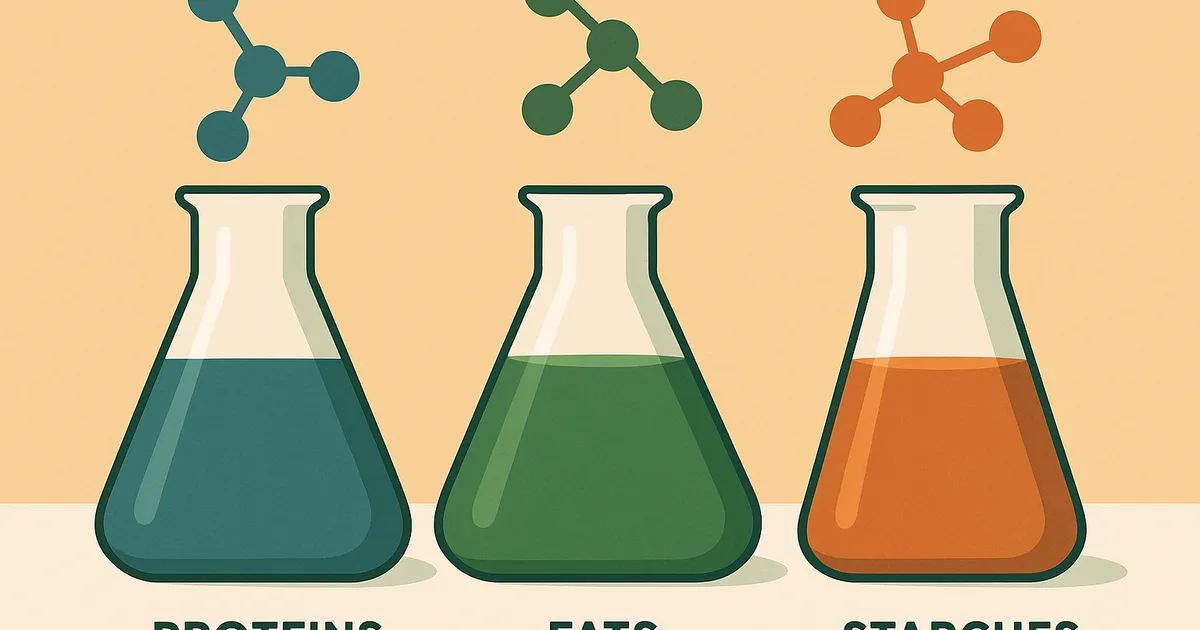
Enzyme cleaners contain proteins such as protease, amylase, and lipase that break organic matter into smaller pieces so it can be rinsed away. If you want the full explanation, see our guide on what an enzyme cleaner actually is and our breakdown of what each enzyme type does.
OdoBan’s other listed components, per the manufacturer’s description of the formulation, include odor counteractants, a nonionic detergent, and chelating agents. Those handle cleaning and smell. None of them digest anything.
Is OdoBan a disinfectant? Yes, and this part matters
This is where OdoBan is genuinely stronger than an enzyme cleaner, and we should say so plainly.
OdoBan carries an EPA registration number, which means it has been tested and approved to make antimicrobial claims. Enzyme cleaners generally don’t have one, and can’t legally claim to disinfect anything. If your goal is killing germs on a countertop, OdoBan is a real product for that and an enzyme cleaner isn’t.
The label states the claims precisely:
- Disinfecting: kills the listed organisms, including Salmonella enterica, MRSA, and E. coli O157:H7, in 10 minutes on hard, nonporous surfaces.
- Sanitizing: kills 99.99% of the listed organisms in 60 seconds on hard, nonporous surfaces.
- Virus claims: kills the listed viruses in 60 seconds on hard, nonporous surfaces.
Read those qualifiers again, because they’re the whole point of this page.
⚠️ Every Antimicrobial Claim Is Limited to Hard, Nonporous Surfaces
The EPA label attaches a footnote to the terms disinfect, sanitize, and virucide, and that footnote reads “on hard, nonporous surfaces.” Carpet, upholstery, mattresses, and clothing are soft and porous. Using OdoBan on fabric is permitted and it will deodorize, but the germ-killing claims don’t extend to those surfaces. This isn’t us second-guessing the product, it’s what the registered label says.
That limitation isn’t unusual or a knock on OdoBan. The EPA notes that most registered liquid antimicrobial products are registered for hard, nonporous surfaces, because soft surfaces are a harder problem to test and prove. We wrote about the whole issue in our guide to disinfecting carpet.
What this means for pet urine on carpet
This is the situation most people are in when they end up asking whether OdoBan is an enzyme cleaner.
OdoBan will make the area smell better. It contains odor counteractants and the manufacturer markets it heavily for pet odors, which is fair. What it won’t do is break down the uric acid crystals that cause urine odor to come back weeks later when the humidity rises.
Uric acid is the reason enzyme cleaners exist for this job. Enzymes digest it into water-soluble pieces that rinse out. A deodorizer neutralizes the smell you can detect today and leaves the crystals in the carpet backing.
| OdoBan | Enzyme cleaner | |
|---|---|---|
| Kills bacteria on hard surfaces | Yes, registered | No |
| Breaks down uric acid | No | Yes |
| Removes the odor source in carpet | No | Yes |
| Masks or counteracts odor | Yes | Indirectly, by removing the cause |
| Registered for soft surfaces | Antimicrobial claims don’t extend to them | Not applicable, not a registered product |
ℹ️ Neither One Is a Complete Answer On Its Own
If you have a pet accident on carpet, an enzyme cleaner addresses the cause and OdoBan doesn’t. If you need to kill germs on a hard surface, OdoBan is registered for it and an enzyme cleaner isn’t. These are different tools for different jobs, and there are situations that call for both, applied one after the other rather than together.
Can you use OdoBan and an enzyme cleaner together?
Not at the same time, and the reason is simple chemistry.
Enzymes are proteins. Disinfectants are designed to destroy microorganisms and denature proteins, which is what makes them work. Spraying a disinfectant onto an enzyme cleaner that’s still working means the disinfectant is acting on the enzymes.
The sequence that works:
- Remove solids and blot liquids so you aren’t treating a puddle.
- Apply the enzyme cleaner and give it the contact time it needs, which is hours, not minutes. See how long enzyme cleaners take to work.
- Let the area dry completely.
- Then apply OdoBan if you still want it, on a surface its label covers.
Doing it in the other order wastes the enzyme product entirely.
So what is OdoBan good for?
Plenty. Being clear that it isn’t an enzyme cleaner isn’t the same as saying it’s a bad product.
- Disinfecting hard, nonporous surfaces. It’s registered for exactly that, with a stated 10-minute contact time.
- General deodorizing. Trash areas, musty rooms, gym bags, cars.
- Mildew odor control on surfaces its label covers.
- Situations where you need an EPA-registered product and an enzyme cleaner won’t do, which is a real and common need.
What to use something else for:
- Pet urine in carpet, rugs, or upholstery. Use an enzyme cleaner. See our guide on removing pet urine smell from carpet.
- Vomit, feces, and blood on fabric. Organic matter that needs digesting, not disinfecting. Our page on enzyme cleaners for vomit covers the method.
- Drain buildup. A quat won’t remove pipe biofilm. See how to get rid of drain flies for why that matters.
Wrapping up
OdoBan is a quaternary ammonium disinfectant and deodorizer with an EPA registration number and a real, tested antimicrobial claim on hard, nonporous surfaces. It contains no enzymes and doesn’t work like an enzyme cleaner.
If your problem is germs on a hard surface, that registration is exactly what you want. If your problem is urine soaked into a carpet pad, no amount of quat will digest the uric acid, and that’s the job enzymes were made for.
We checked twenty popular household products the same way in our guide on which cleaners are actually enzyme cleaners.
Frequently Asked Questions
Is OdoBan an enzyme cleaner?
Does OdoBan have enzymes in it?
Does OdoBan disinfect carpet?
Does OdoBan remove pet urine smell from carpet?
Can you use OdoBan and an enzyme cleaner together?
Is OdoBan safe to use around pets?
Sources
The references used on this page. We link primary sources so you can check our work.
- Pesticide Product Label, ODO-BAN READY-TO-USE, EPA Reg. No. 66243-1, accepted 09/09/2024. US Environmental Protection Agency (www3.epa.gov)
- What's the difference between products that disinfect, sanitize, and clean surfaces?. US Environmental Protection Agency (epa.gov)
- EPA Releases Interim Efficacy Guidance and Test Methods for Disinfection of Soft Surfaces. US Environmental Protection Agency (epa.gov)
Related Articles
Is It an Enzyme Cleaner? 20 Popular Products Answered
We checked the ingredients of 20 popular cleaners to see if they're enzyme-based. OdoBan, OxiClean, Tide, Dawn, bleach, Pooph, and more.
What Is an Enzyme Cleaner? How They Work
Enzyme cleaners use biological proteins to break down stains and odors at the molecular level. Learn how they work and find the right one for your job.
Types of Enzymes in Cleaners: Proteases, Lipases, Amylases
Learn what proteases, lipases, and amylases do in enzyme cleaners. Match the right enzyme to your stain type. See our guide.
Cleaning Product Researcher
Sarah Chen is a pen name for our lead product researcher. A lifelong dog person who now shares her home with two cats, she's no stranger to enzyme cleaners. She writes the guides and reviews on this site based on product research, ingredient analysis, and real user feedback.